
Last updated November 15, 2026
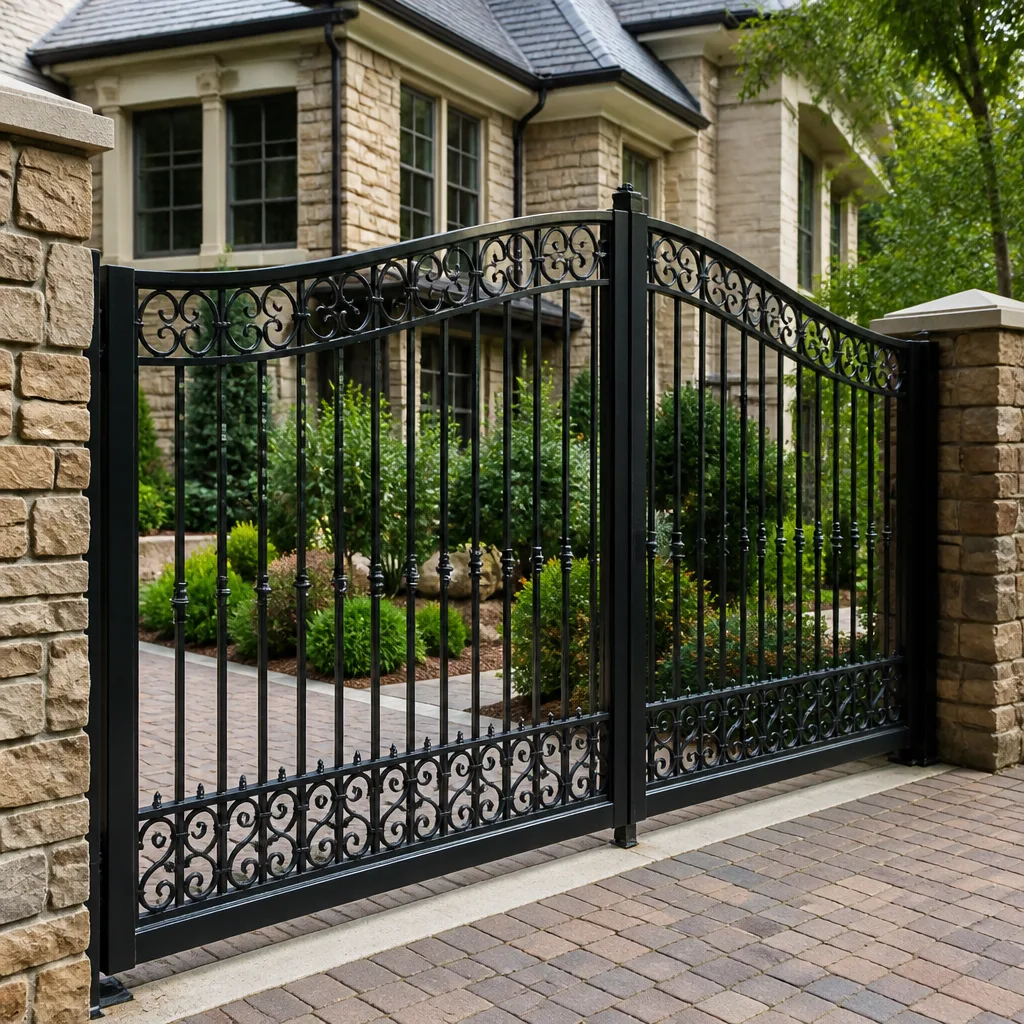 Wrought iron
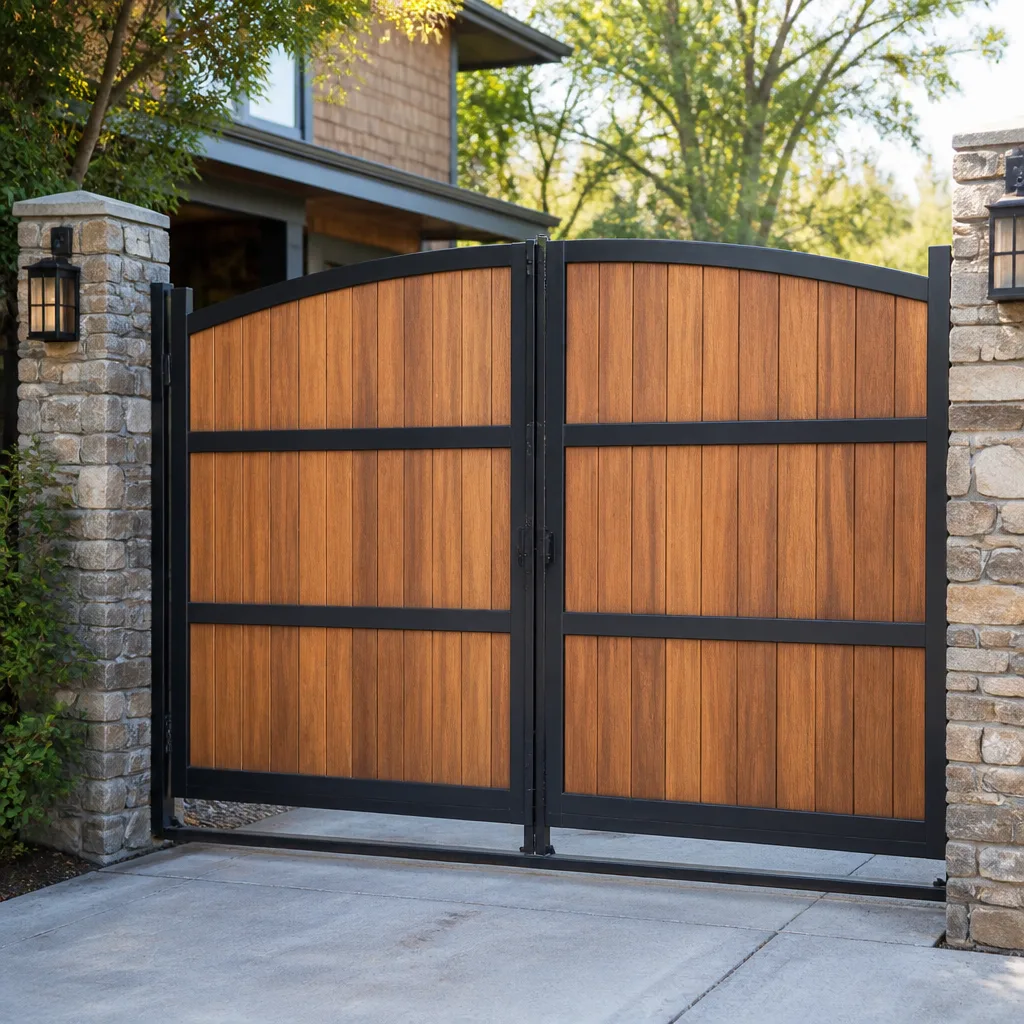 Wood & steel frame
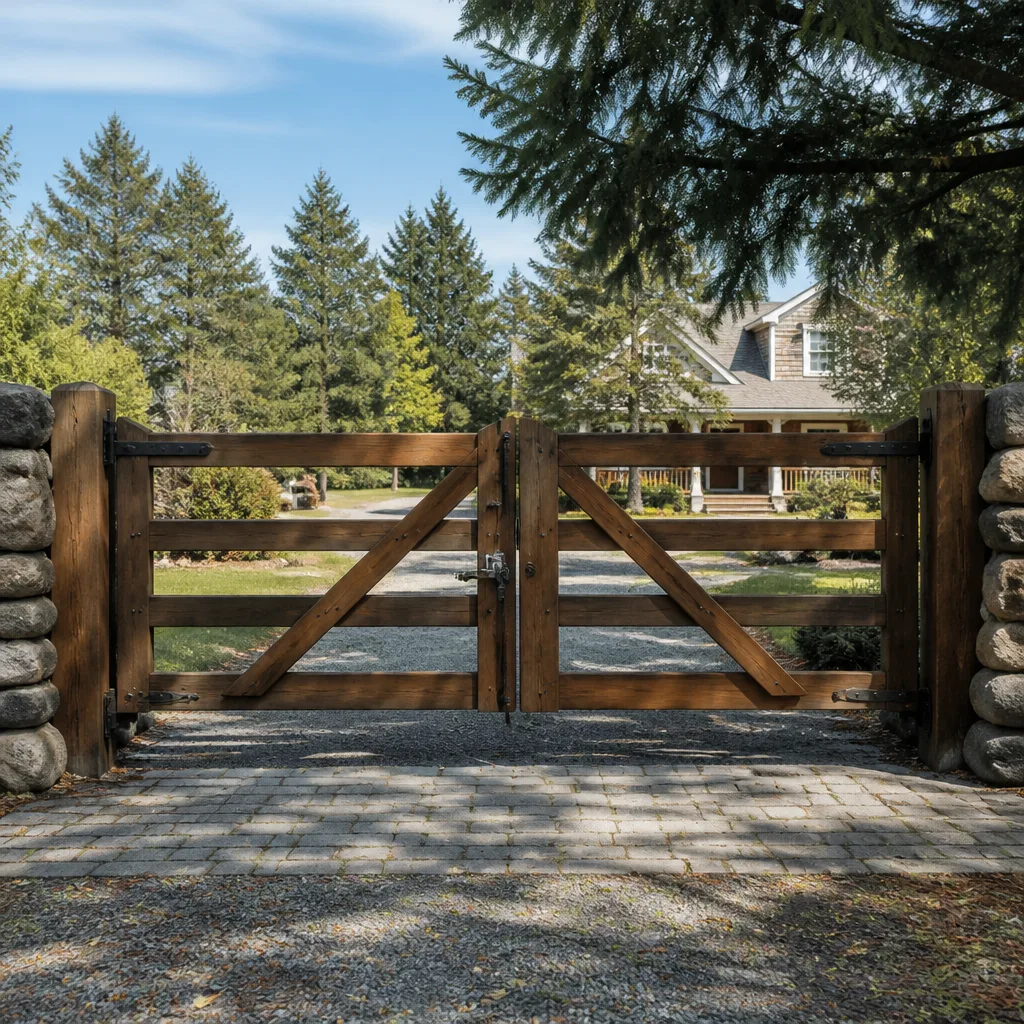 Farm & ranch
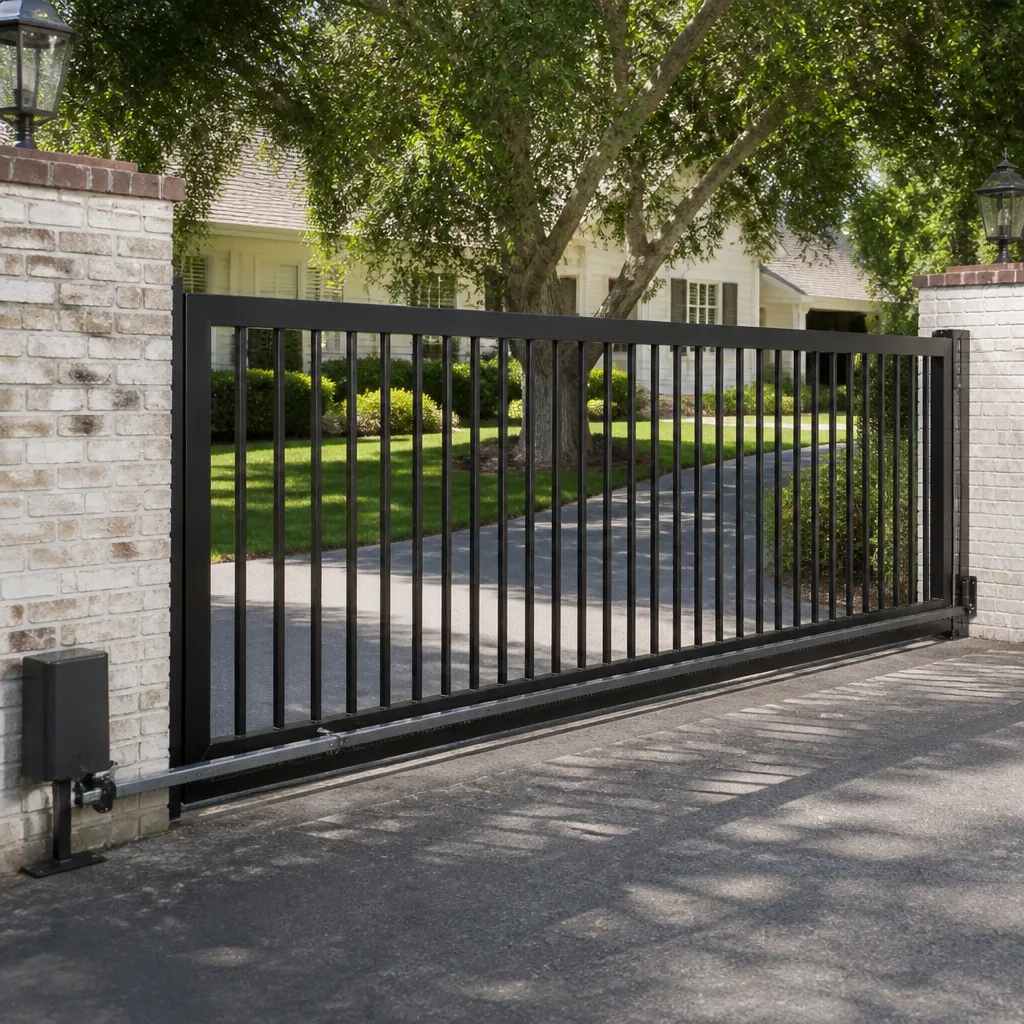 Sliding driveway gates
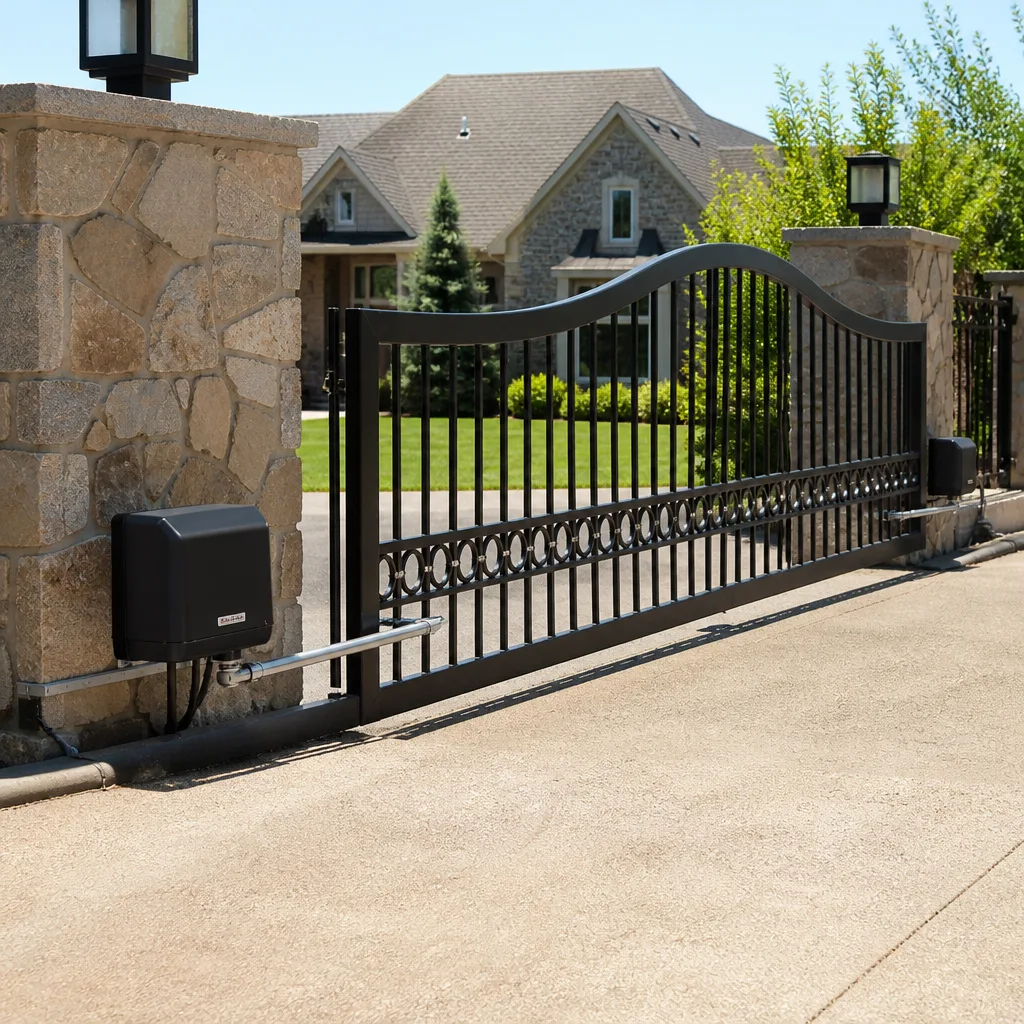 LiftMaster operators
Free on-site gate assessment - hinges, posts, and your LiftMaster or Nice gate operator checked before anything is quoted
The assessment is free and the quote is the invoice.
Get your free estimateDIY vs Professional Gate Repair: The Washington Homeowner’s Decision Guide
Most homeowners assume the DIY-or-professional question comes down to skill. It doesn’t. It comes down to which tasks are physically safe to attempt and which ones can injure someone you’ll never meet, long after you’ve put your tools away. A gate that fails to reverse when something blocks it isn’t a nuisance; it’s a liability. On a property in Washington, where gates often sit close to sidewalks, alley access, and shared walls, an improperly adjusted safety edge can strike a child or a pet before anyone realizes the fix went wrong.
This guide separates the repairs you can handle without putting anyone at risk from the ones where a trained technician belongs in the loop. You’ll get a decision framework, a task-by-task breakdown, and the Washington-specific reasons a broken gate is rarely a straightforward weekend job. If you decide you want help, we handle gate repair across the city, and we’re glad to walk you through what your repair will involve.
Quick Answer
Simple mechanical fixes – cleaning photo-eye sensors, lubricating hinges, tightening a loose bracket, checking wiring connections at the terminals – are realistic DIY tasks for a careful homeowner. Everything else involving the operator’s safety reversal system, the control board, high-voltage power to the opener, or the structure that holds a heavy gate panel belongs with a professional. In a Washington market where gates frequently sit on shared walls, in shared alleys, or on original masonry posts, the number of genuinely DIY-appropriate repairs is smaller than most homeowners expect.
Styles & brands we work with
- Wrought iron
- Wood & steel frame
- Farm & ranch
- Sliding driveway gates
- LiftMaster operators
Table of Contents
- Why Washington Gates Are Harder Than Suburban Ones
- What’s Genuinely Safe to DIY on Any Gate
- Why Safety Reversal Systems Should Never Be DIY-Adjusted
- Electric Gate Repair: Where the Line Really Is
- The Real Cost of a Failed DIY Repair
- Three Questions That Tell You Whether It’s DIY Territory
- How Brand Knowledge Changes the Diagnosis
- Repair vs Replacement: When DIY Isn’t the Question
Why Washington Gates Are Harder Than Suburban Ones
Suburban gate work happens in wide driveways with plenty of clearance, one owner, and a standard set of parts. Washington is different in just about every way that matters. The city’s row-house lots, alley access patterns, and age of property shapes what a technician or a homeowner is actually working on, and it changes the risk profile of a repair.
The physical setup is the first complication. Many Washington gates close off alleys that serve multiple properties, so a gate you own may share a post, a hinge point, or a wall with a neighbor. Adjusting your side can throw off theirs. Historic masonry posts – stone piers, brick columns, original ironwork – carry gate weight in ways a modern welded steel post was never designed to, and a repair that adds stress to that masonry can crack the pier over time.
Alley access adds another constraint. In many parts of the city, a full-size repair truck can’t park directly at the gate. That matters less for a professional who plans for it and a great deal more for a homeowner who suddenly needs to move a heavy gate panel out of the way and has nowhere to set it down. Clearances are tight, wires often run through older conduits that weren’t designed for modern automation, and automation retrofitted onto a gate built for a manual pull-to-open system is standard here, not the exception.
What that means for you: a repair that reads as “just tighten this hinge” on a suburban gate often becomes “re-hang the gate so the safety edge reads a clean obstruction zone” on a Washington one. The threshold between safe DIY and professional work sits further toward professional here. Our technicians have up to experience working within these constraints, and we’ve found that the properties that look simplest on paper are often the ones that surprise a first-time DIYer.
What’s Genuinely Safe to DIY on Any Gate
There is a real list of gate tasks a careful homeowner can do. These are low-voltage or no-voltage jobs, they don’t affect the gate’s structural load path, and getting them wrong most likely means the gate stops working rather than something or someone gets hurt. We’d honestly rather you knew this list than thought every minor annoyance required a service call.
- Cleaning photo-eye sensors. The small lenses at the gate opening collect dust, pollen, cobwebs, and grime. A soft cloth and a bit of water, with the system powered down at the breaker, will clear most “sensor blocked” faults. This is the single most common false alarm on an automated gate.
- Lubricating hinges and pivot points. A few drops of a proper gate-hinge lubricant, applied with the gate stationary and stable, extends hinge life and quiets a squeal. Never lubricate a track on a slide gate with anything that attracts grit – use a dry silicone product if the manufacturer recommends it.
- Checking wiring connections at the terminals. With power off, look for a loose screw at the terminal block or a wire that has worked its way free of a connector. Re-seating a connection is fine. Chasing wire through a wall is not a homeowner job.
- Clearing debris from the gate’s travel path. Leaves, gravel, and ice in the track or under the swing arc are responsible for more “the gate is broken” calls than any failed component.
- Replacing a keypad or remote battery. Small, safe, and often the entire solution to an “unresponsive” gate.
These tasks cost nothing beyond a cloth, a lubricant, and ten minutes. Every Washington homeowner who owns a gate should be able to do all five. Beyond them, the risk curve steepens fast.
Why Safety Reversal Systems Should Never Be DIY-Adjusted
A gate that fails to reverse when it meets an obstruction is a serious hazard, and the safety reversal mechanism is the system designed to prevent that outcome. It’s tempting to think a little adjustment here is harmless – the gate opens and closes, right? But the reversal system is exactly the component most likely to cause injury when it’s out of calibration, and its behavior is governed by an industry safety standard (UL 325) that describes the forces and the response times the system has to satisfy.
Getting that wrong is easy without the right equipment. A gate that looks responsive in the middle of its travel may not detect an obstruction in its final inches of closure, where a small child is most likely to be. A slide gate that reverses correctly on a block of wood may not reverse correctly on a soft or flexible object. And a gate that seems fine in dry weather may sit heavier in cold and settle differently against its stops.
The safety edge and the force-adjustment settings on the operator are the two things we tell every Washington homeowner not to touch without proper training and a proper measurement tool. In our experience, this is where DIY injuries on residential gates almost always originate. The adjustment itself takes a technician minutes. Undoing a bad adjustment takes longer, and the consequence of getting it wrong isn’t a repair bill – it’s a liability that follows the property owner.
If your gate has ever failed to reverse, stop using it and have it inspected. This is not a “watch it and see” situation. Power the system down at the breaker if the gate is moving on its own, and call for help. You can read more on what our electric gate repair work covers, but the short version is this: a failed reversal is exactly the kind of job a trained technician should handle.
Electric Gate Repair: Where the Line Really Is
An automated gate is two systems bolted together: a mechanical gate and an electrical operator with control and safety electronics. The mechanical half is sometimes a homeowner’s work. The electrical half almost never is, because the two failure modes it presents – shock and unsafe movement – are both serious.
Here’s a practical line-by-line read of the electrical side:
- Control board faults and operator failures. The control board is the brain of the gate. A board that’s failing typically shows up as erratic behavior, loss of programming, or a gate that stops mid-travel. Diagnosing a board requires knowing what the brand expects to see on each terminal, and replacing one requires matching it precisely to the operator. Not a homeowner task; the wrong board can damage the operator.
- High-voltage power to the operator. This is line power. Do not open the operator housing if you don’t know what’s inside. This is where we draw the firmest line.
- Loop detectors and access-control components. These are the in-ground or surface-mounted sensors that tell a slide gate a car is approaching, and the keypads, intercoms, and card readers that control who gets in. Faults here often trace back to wiring buried underground in older Washington installations, where a small break in a conduit means chasing the wire to find the fault. That’s not a homeowner call.
- Wiring runs and connections behind a wall or under pavement. Replacing a damaged run means pulling new wire through a conduit. This is the single most common reason a “sensor problem” turns out to be a bigger job than expected, especially in older properties.
We’re gate-only specialists, and that matters here. A general handyman will look at an operator and call it beyond their scope. A gate technician recognizes the brand, knows the terminal layout, and knows whether the symptom points at the board, the sensor, or the wiring. That’s the difference between a repair and a run of guesswork. Our Gate Repair Washington service exists precisely to keep that expertise in-house.
The Real Cost of a Failed DIY Repair
The worst-case cost of a failed DIY gate repair is an injury, and we don’t want to soften that. But even setting safety aside, a botched repair costs more than the part you tried to replace. The reason is diagnostic time – the time a technician has to spend understanding what was done, undoing it, and then starting the actual repair from a known state.
When a technician arrives at a gate that has been worked on by a homeowner, they can’t assume the gate is in factory condition. They have to trace what was unplugged, what was re-wired, what was adjusted, and what was re-set. A quick job becomes a longer one. Common examples:
- A control board wire pulled loose during a DIY look-see. Finding it takes longer than the original fault would have.
- A limit switch moved out of position, so the gate overshoots or stops short every cycle. The original problem plus a new calibration issue.
- A hinge tightened to the wrong torque, warping the gate frame so the panel no longer hangs square. Now the repair is structural.
- A safety edge adjusted beyond spec. The repair is now a safety inspection plus recalibration, not a part swap.
None of these are catastrophic, but each one turns a single free estimate and a one-visit repair into a two-stage job. The math on DIY usually favors the homeowner only when the repair is genuinely on the safe-DIY list above. Once you’re outside that list, the economics tip toward a professional far faster than most people realize. We always set the price in a written estimate before any work starts, and the estimate is free, so the diagnosis itself doesn’t cost you anything to get.
Three Questions That Tell You Whether It’s DIY Territory
Rather than asking “do I feel confident?”, ask these three. They map the specific repair to its actual risk and give you a clear answer without guessing.
- Does the repair involve opening the operator housing, disconnecting a power wire, or touching the control board? If yes, it’s a professional job. The operator houses line voltage and low-voltage control together, and the potential for electric shock or an unsafe gate response is real. Stop here.
- Does the repair change how the gate moves or how the safety reversal behaves? If the gate’s stopping point, its closing force, its safety-edge sensitivity, or its limit switches will change as a result of your repair, it’s a professional job. Movement and safety calibration go together.
- Does the repair involve the structure that holds the gate (post, pier, hinge plate, frame) or the wiring behind a wall or underground? If the gate’s weight-bearing structure or buried wiring is involved, it’s a professional job. Masonry posts in Washington homes can crack under a re-hung load, and buried wiring haunts more repair jobs than any other single factor.
If you answered no to all three, the repair is likely on the safe-DIY list, and you can attempt it with confidence. If you answered yes to any one, we’d genuinely recommend you call. That answer isn’t about your skill – it’s about whether the risk profile of the job fits a homeowner in a driveway on a Sunday afternoon. For more on the types of jobs we handle, you can see how we approach Washington gate work in general.
How Brand Knowledge Changes the Diagnosis
Gate operators aren’t interchangeable. A symptom that means “faulty control board” on one brand can mean “faulty sensor wiring” on another, and the terminal layout, programming menu, and error codes are brand-specific. This is the reason a gate specialist’s diagnostic time is short and a generalist’s is long. We work on the brand you already have, and we’re experienced with the brands that show up most often on Washington gates.
- LiftMaster – common on residential swing and slide gates across the city; their operators have distinctive behavior around safety-reversal faults.
- FAAC – often seen on older installations where control-board logic differs substantially from newer operators.
- BFT – found on a range of residential and light-commercial gates, with programming menus that non-specialists find opaque.
- Linear – frequent on access-control-integrated gates; their loop detector and keypad interactions are a common source of false alarms.
We diagnose by brand rather than by trial and error, which usually means a single visit to fix the problem rather than a series of “let’s try this.” That’s not a sales pitch – it’s a real difference in how long a repair takes and how quickly a homeowner gets their gate working again. We’re independent, which means we work on the system you already own rather than steering you toward a brand we prefer. If your gate is built around a different manufacturer, don’t worry; those four are simply the ones we see most frequently in Washington.
Repair vs Replacement: When DIY Isn’t the Question
Some gates reach a point where repair isn’t the right answer. If the gate has been failing repeatedly, if the masonry it hangs from is failing, or if the property’s needs have outgrown the gate’s original design, the question shifts from “can I fix this myself?” to “what should go there instead?” That’s a decision made on measurements and site conditions, not on confidence.
Installation is a schedule-first job, not a speed-first job. Gallons of online advice frame gate installation as a weekend project, and for a small manual garden gate that can be true. For an automated swing or slide gate – which is what most Washington driveways and alley entrances actually have – it isn’t. You need the right footing depth for your soil and post load, the right clearances for the gate’s travel arc, wiring for power and safety devices, and the operator set to spec for the panel weight and speed. A gate that’s installed badly will fail – often in ways that cost more to correct than a new install.
We do new installation as one of our three service lines, alongside repair and electric gate repair, which means a homeowner who has us out for a repair can ask us the install question without starting over with a new vendor. If you’re facing a replacement decision, we’d rather you make it informed. We’ll measure, tell you what the site allows, and give you a written estimate. There’s no same-day promise on installation because it isn’t honest to make one – installation is scoped, ordered, and scheduled properly.
Common Mistakes to Avoid
- Adjusting the safety reversal by feel. A gate that “seems to reverse fine” when you test it with a shoulder isn’t the same as a gate that reverses within spec on every obstruction. Leave it to a technician with the right measurement tool.
- Closing the gate through a power cut without disengaging the operator. Manual release levers exist for exactly this, but forcing a gate against its engaged operator can damage the gearbox or strip the limit switch. Learn where your release is before you need it.
- Lubricating a slide-gate track with oil or grease. Wet lubricants collect grit and grit wears rollers. A dry silicone product is usually correct; check the manual.
- Assuming a sensor fault is a sensor replacement. In older Washington installs, a sensor fault is often a damaged wire underground. Replacing the sensor won’t fix it and costs you money.
- Re-hanging a gate on a historic masonry pier without a structural check. Stone and brick piers weren’t designed for the loads a modern gate with an operator adds. Small adjustments can crack a pier, and that’s a masonry repair on top of a gate repair.
- Working on an alley gate without telling the neighbor whose property shares the post or hinge. Adjusting your side can shift their gate. In shared-access Washington properties, a five-minute conversation saves a five-hundred-dollar dispute.
- Letting a neighbor’s “I know a guy” override a licensed gate specialist for electrical work. Good intentions don’t cover arc-flash risk. If the repair involves the operator’s electrical side, use a professional.
- Skipping the written estimate. Any repair worth doing is worth getting the price in writing before work starts. That’s standard, and we’d encourage you to insist on it no matter who you hire.
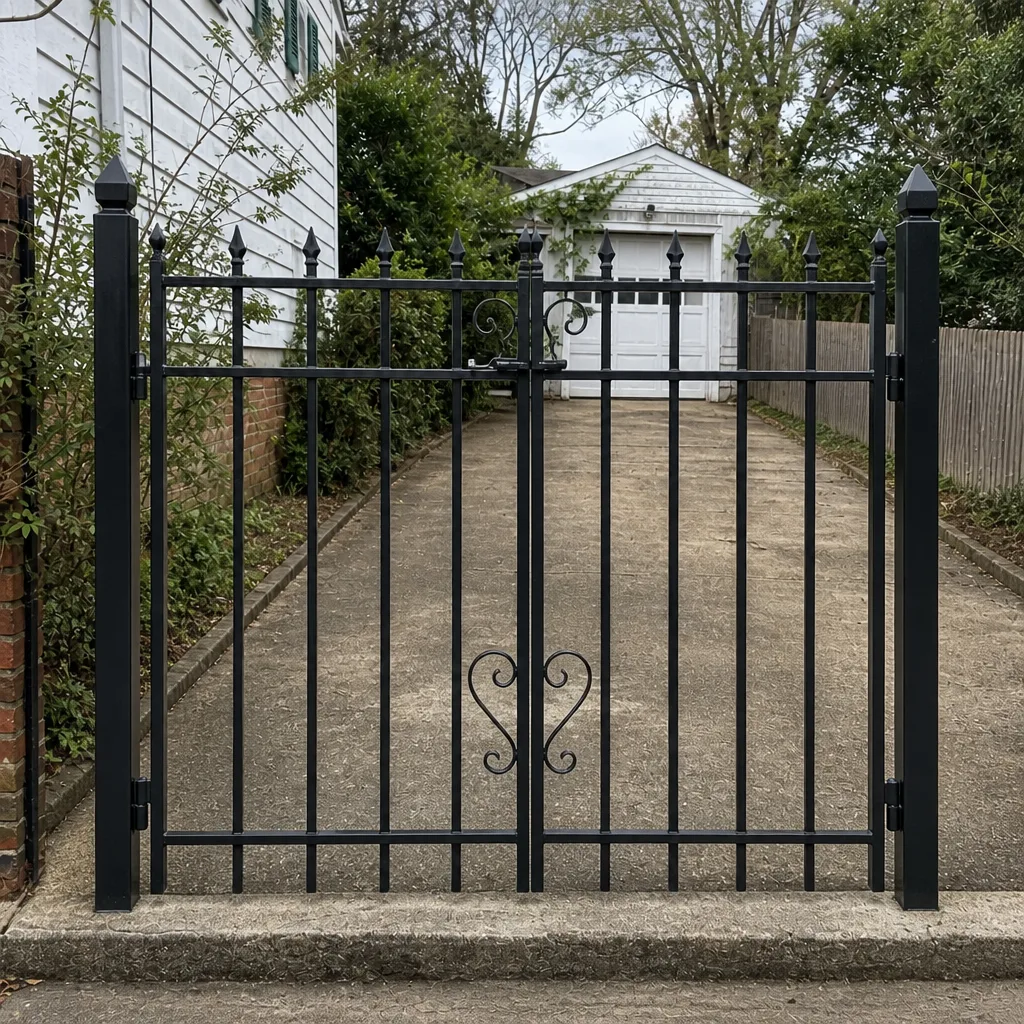
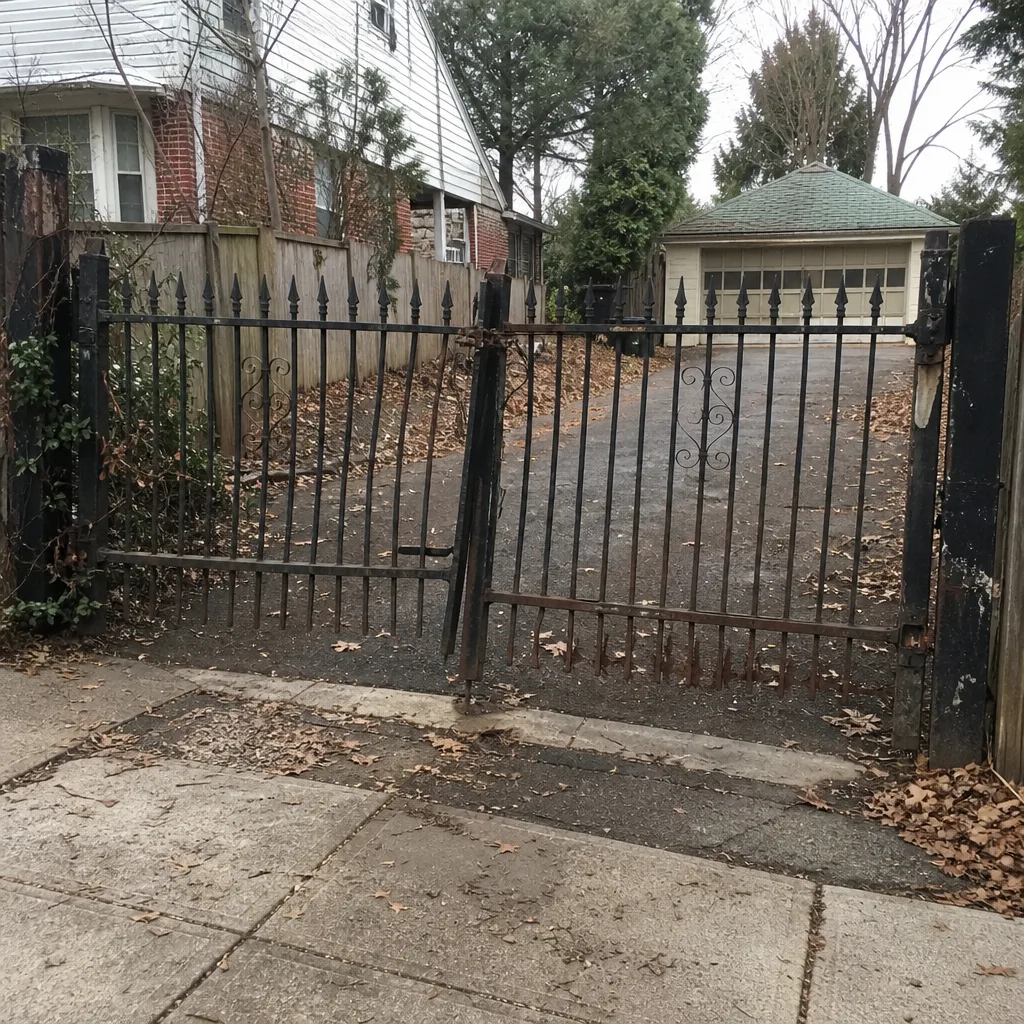
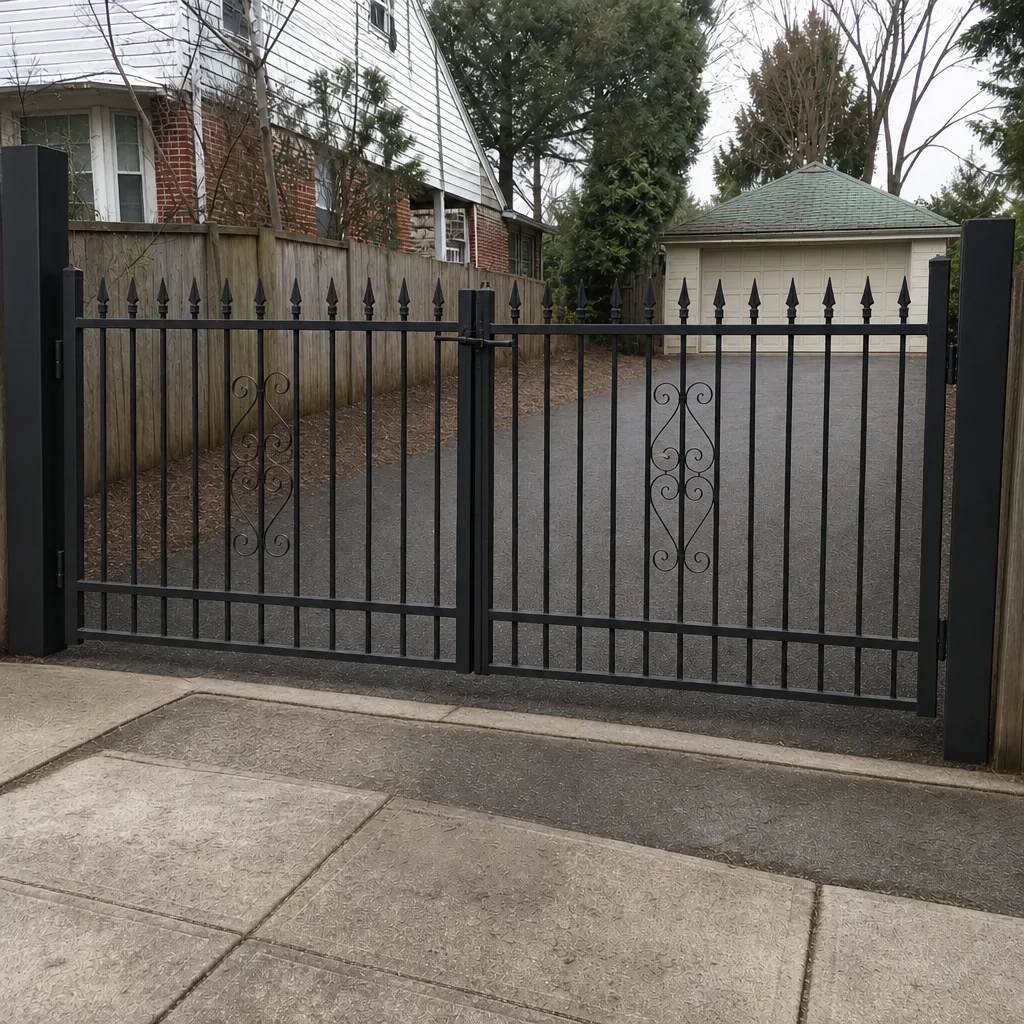
See the difference
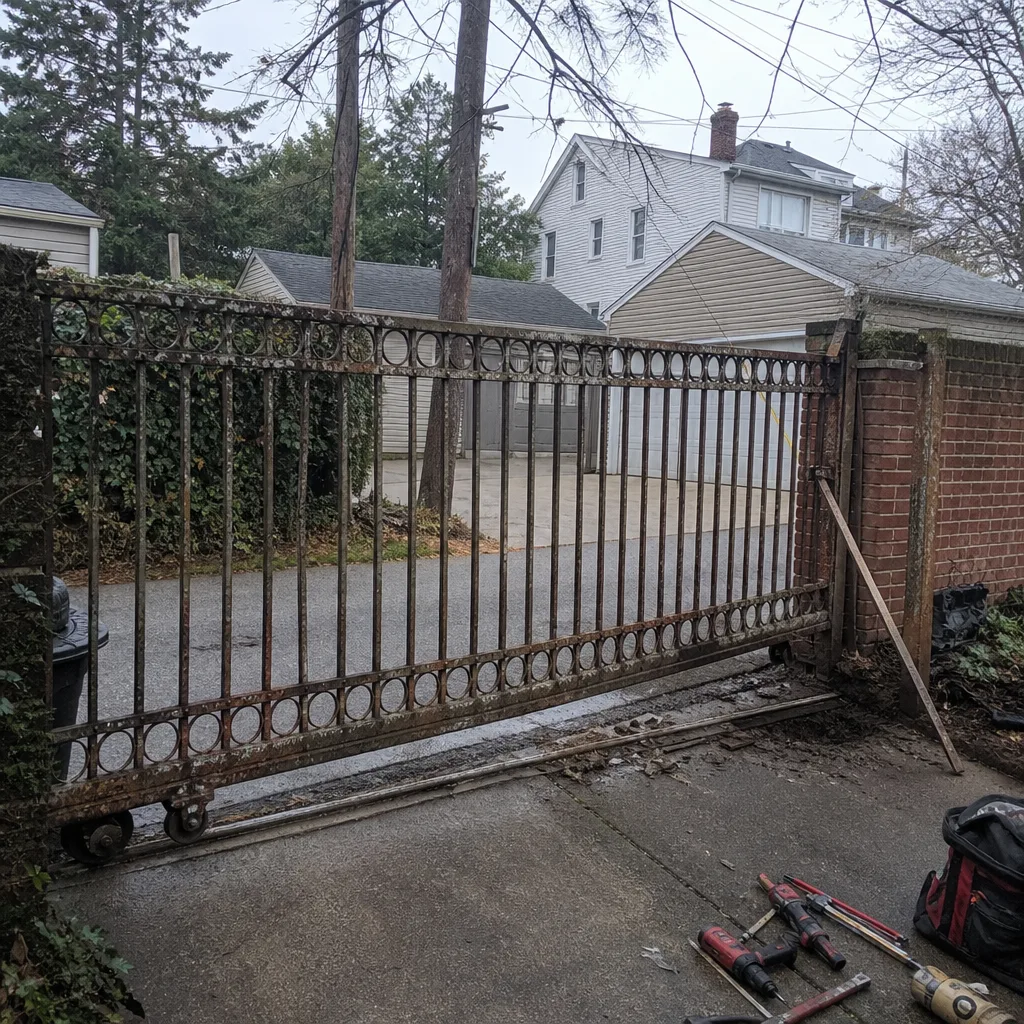 Before
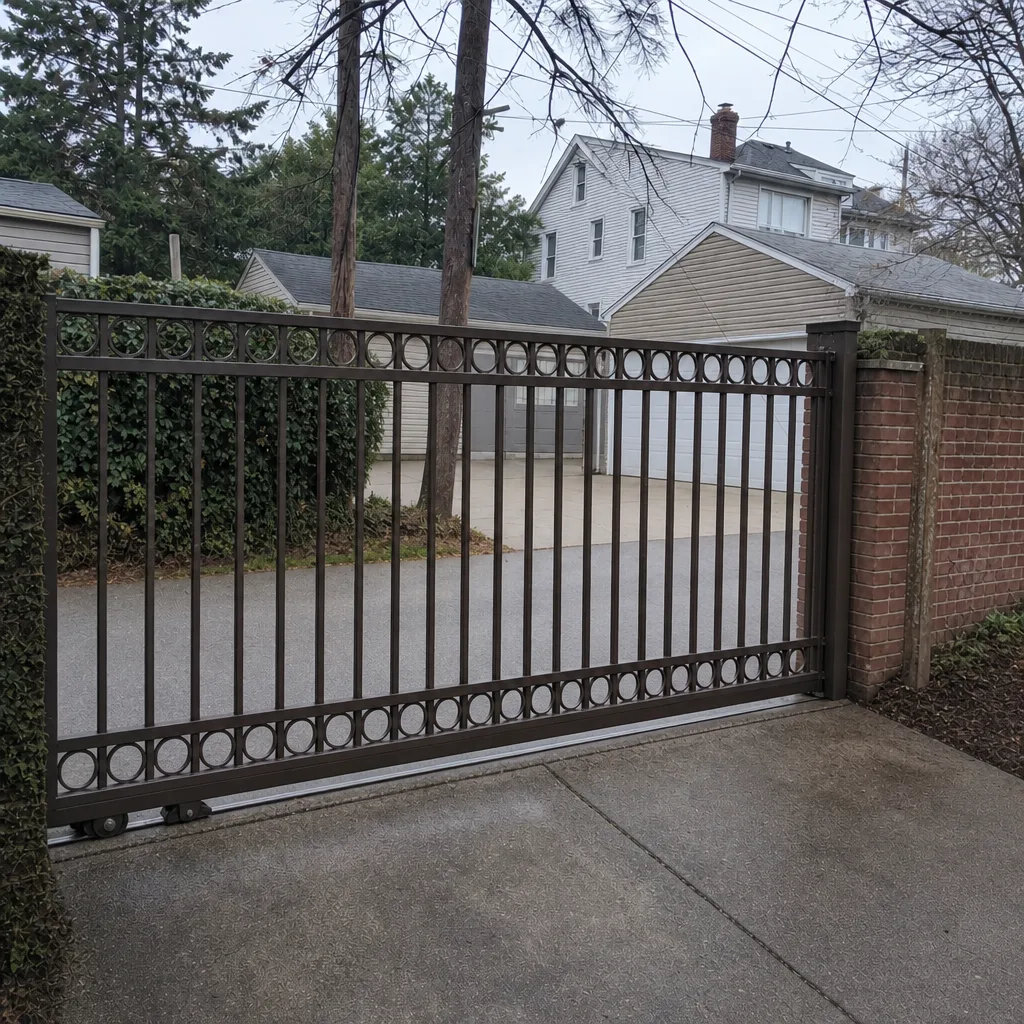 After
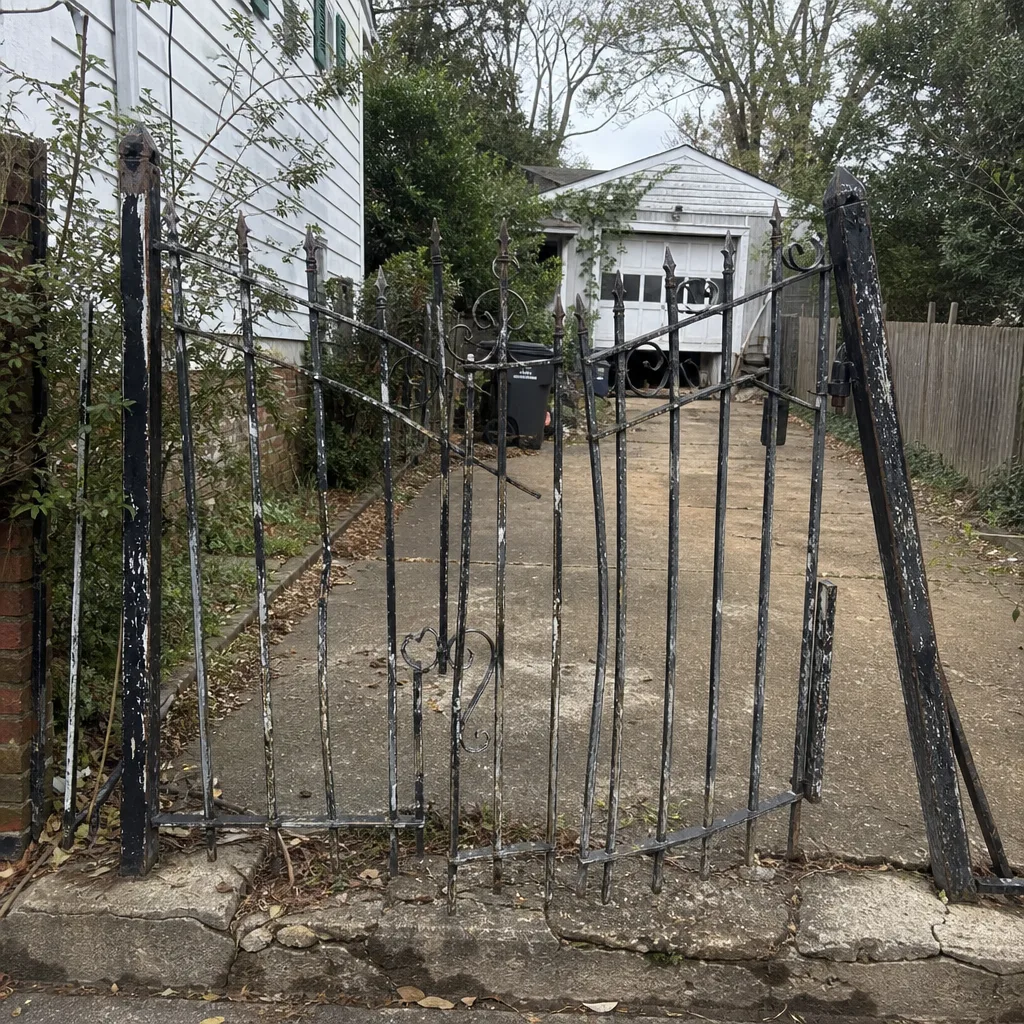 Before
 After
 Before
 After
When to Call a Professional
Call a professional when the gate fails to reverse on obstruction, when the operator won’t respond to the remote or keypad, when the gate stops mid-travel or runs on its own, when the control board shows fault indicators, when a hinge or post seems loose, when the safety edge has been damaged or the wiring looks compromised, or when a masonry post shows a new crack. Those are all circumstances where the risk of a DIY attempt outweighs any potential savings, and where the right repair usually takes less than an hour once a trained technician is on-site.
Gate Repair Washington offers free estimates in Washington, and the written estimate sets the final price before any work begins. Call (888) 260-4909 – we answer 24/7, with fast dispatch from 7am to 7pm, Sunday through Friday. We work on the brand you already have.
Frequently Asked Questions
Only for the tasks that don’t involve the operator’s electrical side or the gate’s movement and safety calibration. Cleaning photo-eye sensors, lubricating hinges, tightening a loose terminal connection, clearing debris from the travel path, and replacing a remote battery are all genuinely safe for a careful homeowner. Anything inside the operator housing, anything that changes the gate’s stopping point or reversal behavior, and anything involving buried wiring should go to a technician. Call (888) 260-4909 if you’re unsure which side of that line your repair falls on – the estimate is free.
You can’t fully know without a measurement tool and the manufacturer’s force limits, which is exactly why a safety-edge or force adjustment shouldn’t be a DIY job. A visual check – does the gate reverse when something enters the beam – confirms the sensor is wired, not that it’s calibrated. If you have any doubt about your gate’s reversal, have it inspected. Call (888) 260-4909 for a free estimate on a safety inspection.
No – that symptom usually points at the control board, the operator, or the wiring, all of which are professional territory. A signal that reaches the operator but doesn’t produce movement means the fault is inside the operator’s electrical chain rather than at the remote. Diagnosing which component failed is brand-specific work, and it’s the kind of job our technicians handle regularly on LiftMaster, FAAC, BFT, and Linear systems. Call (888) 260-4909 for a free estimate.
Because Washington properties add two constraints suburban properties usually don’t have: shared structures and constrained access. Alley gates can share a post or hinge point with a neighbor, and adjusting one side affects the other. Historic masonry piers carry gate loads in ways modern posts weren’t designed for, so a repair that changes that load needs a structural eye. Alley access limits where a repair vehicle can park and where a heavy panel can be set down. All of it shifts the DIY threshold toward professional work. If you’d like a free estimate on a Washington gate, call (888) 260-4909.
Yes – and that’s the biggest risk of DIY gate work. A gate can open and close smoothly in normal operation while its reversal force is beyond spec, meaning it won’t stop for a child or pet in its path. The visual appearance of “working” isn’t the same as safe. If you’ve adjusted anything on the gate’s movement or safety side and haven’t had it verified, have it checked. Call (888) 260-4909 for a free estimate on a safety verification.
Most cities require a permit for structural work on a fence or gate and often for electrical work tied to an operator, though the exact requirements vary by property and zoning. Ask the DC Department of Buildings before you commit to a design, especially on a historic property or a shared alley gate. For the installation side, we scope the job and confirm what’s required as part of the written estimate. Call (888) 260-4909 to talk through your project – the estimate is free.
The Bottom Line
The DIY-versus-professional question for gate repair isn’t really about whether you’re handy. It’s about whether the specific task touches the operator’s electrical system, the gate’s movement, its safety reversal, or the structure that holds it. If the answer is no on all four, you’re on safe ground and we’d encourage you to make the repair yourself. If any one is a yes, the risk shifts in a way that no amount of confidence can offset. In Washington, the property constraints – shared windows and alleys, historic masonry posts, constrained service access – push the threshold further toward professional work than most guides admit. If you’d like a straight answer on your specific repair, we’re glad to give one.
Gate Repair Washington handles gate repair, electric gate repair, and installation, with three focused service lines and technicians experienced with the major brands you’ll find on Washington properties. Call (888) 260-4909 for a free estimate. We answer 24/7, with fast dispatch from 7am to 7pm, Sunday through Friday.
Written by the team at Gate Repair Washington.