
Last updated November 15, 2026
 Wrought iron
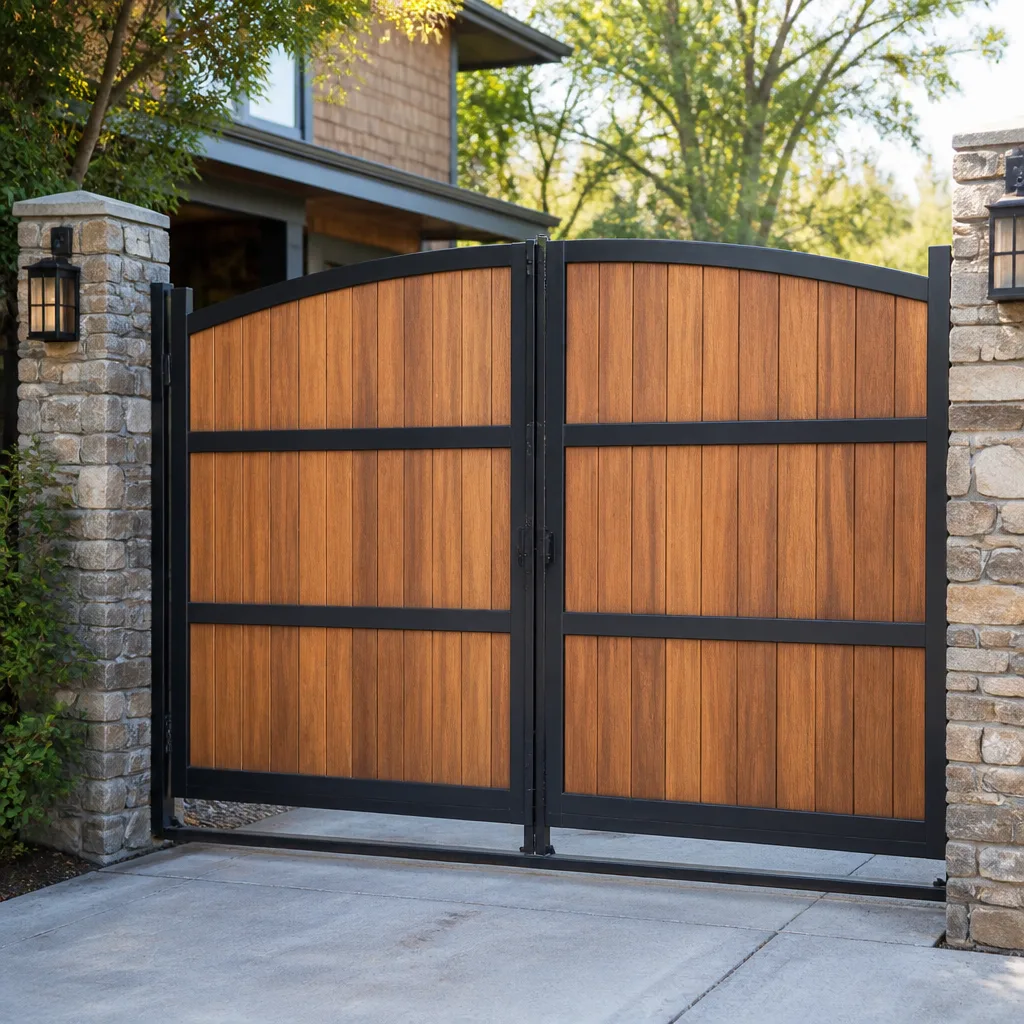 Wood & steel frame
 Farm & ranch
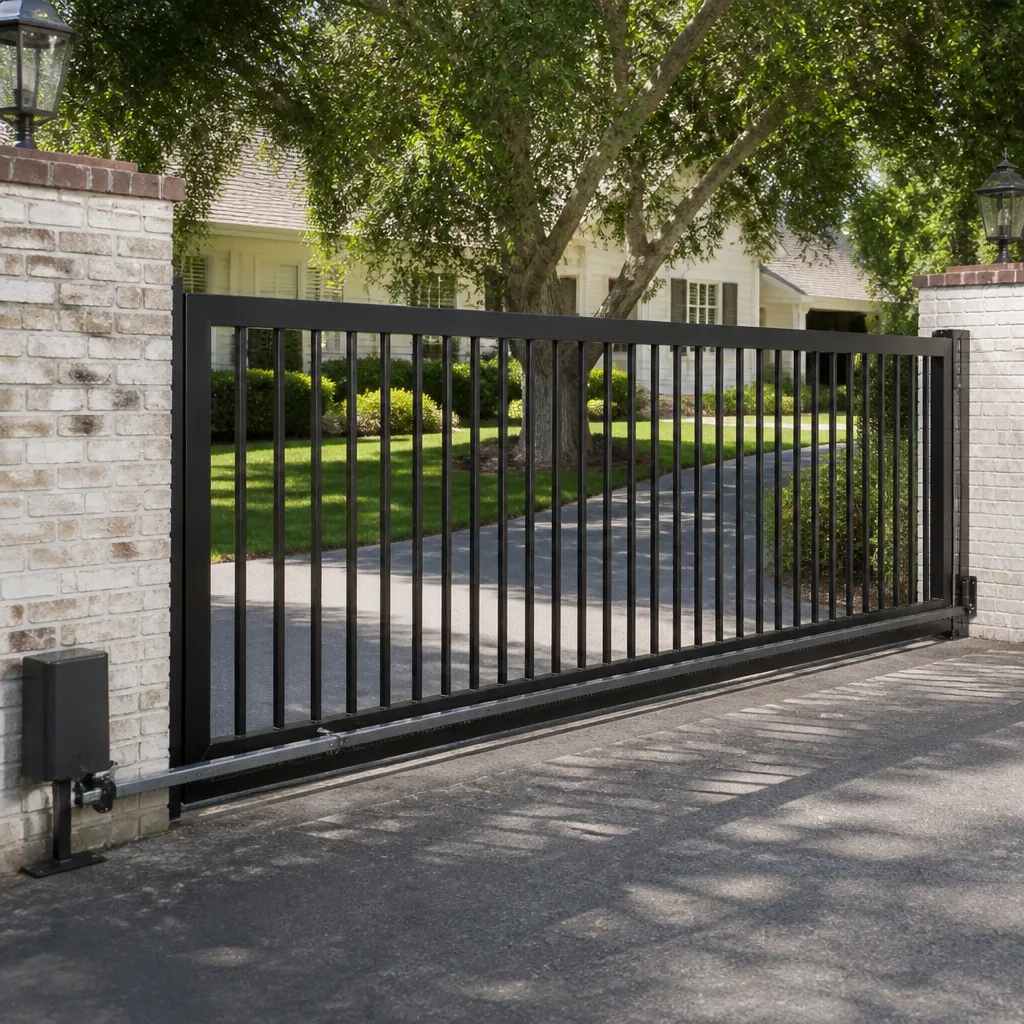 Sliding driveway gates
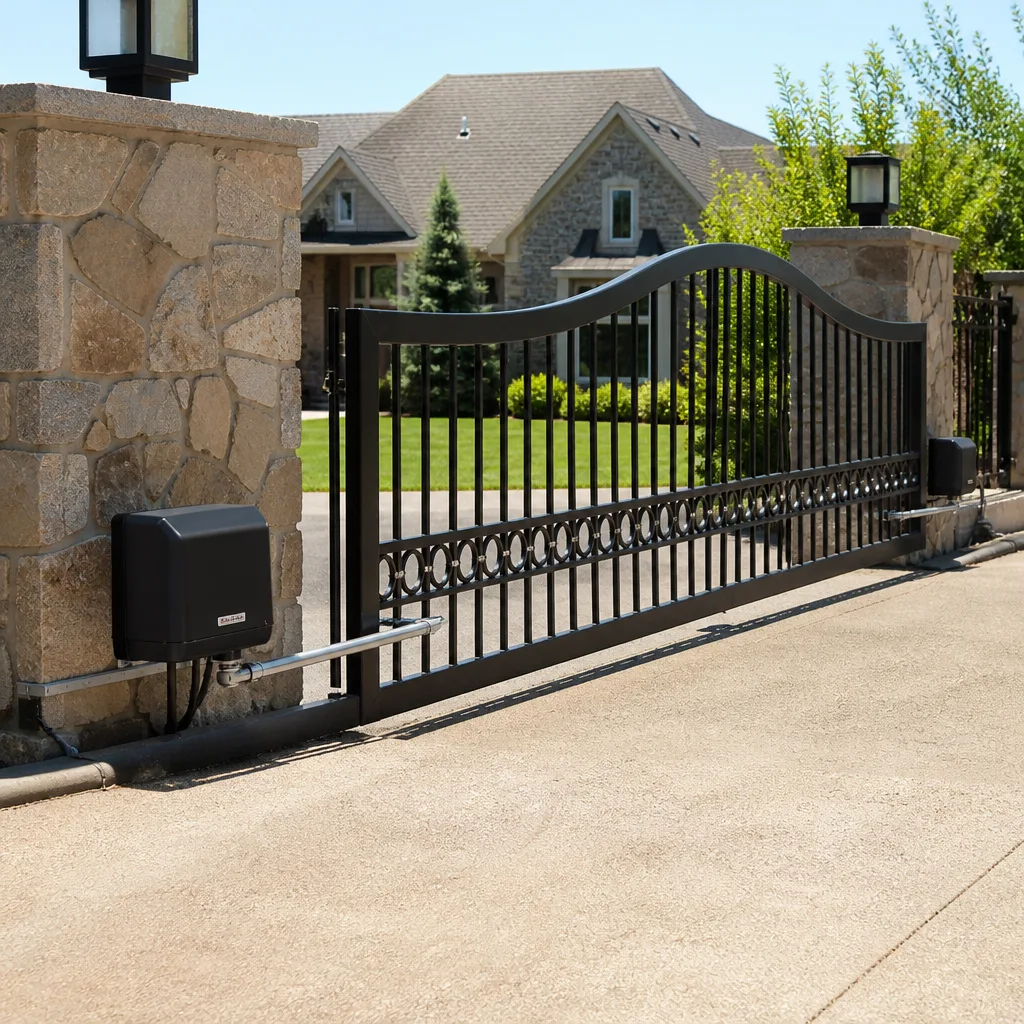 LiftMaster operators
Free on-site gate assessment - hinges, posts, and your LiftMaster or Nice gate operator checked before anything is quoted
The assessment is free and the quote is the invoice.
Get your free estimateGate Repair Troubleshooting in Washington: Common Problems and How to Fix Them
A gate that “just stopped working” is never the full story. The motor hum you hear (or don’t hear), the direction it stalls, and whether it fails on the way open or the way closed all point to completely different problems with completely different fixes. Most gate failures trace back to one of five root causes, and knowing which one you’re dealing with before you call anyone saves Washington homeowners time, money, and repeat service calls. This guide teaches you to read the symptom first, then narrow it down. Through the sections below, we walk through the mechanical and electrical failures we see most often on Washington gates, how to tell them apart without tools, and the three checks worth doing before you pick up the phone.
Quick Answer
Gate repair troubleshooting in Washington starts with reading the symptom, not the part. If the gate is completely dead, check power and the safety sensors first; if it hums but doesn’t move, the operator or a mechanical bind is usually at fault; if it reverses mid-cycle, a sensor or limit setting is the likely cause. Most failures fall into five categories: power and control, operator motor, limit switches, safety sensors, and mechanical binds from hinges or track. Diagnosing which one you have is what determines whether it’s a two-minute reset or a repair call.
Styles & brands we work with
- Wrought iron
- Wood & steel frame
- Farm & ranch
- Sliding driveway gates
- LiftMaster operators
Table of Contents
- Why You Should Diagnose by Symptom, Not by Part
- A “Dead” Gate That Won’t Respond at All
- Control Board Failure vs. Limit Switch: Telling Them Apart
- The Gate That Reverses Mid-Cycle
- Humming, Stalling, and the Mechanical Bind
- When a Dead Gate Is Just a Tripped Safety Sensor
- How Washington Humidity and Freeze-Thaw Cycles Wear Gates Down
- Three Checks to Run Before Calling for Service
Why You Should Diagnose by Symptom, Not by Part
When a Washington gate stops working, most people start by guessing at the part that failed. That’s backwards. Two gates can look identical from the curb and have nothing in common electrically, and the symptom tells you which system to look at first. A silent gate points to power and control. A humming gate points to the operator or a mechanical bind. A gate that opens but won’t close points to a sensor or a limit. Same brand, same neighborhood, three different repair paths.
This matters because gate systems have layers. An operator from Viking or Ghost Controls sits on top of a control board, which takes signals from limit switches and safety sensors, which in turn depend on clean wiring and a solid power source. Any layer can fail, and each failure looks slightly different if you know what to watch for.
Here’s the mental model we use: think of the gate as a chain of command. The control board gives the order, the operator carries it out, and the limits and sensors keep it honest. When something breaks, the symptom usually tells you where in the chain the failure happened.
- No sound, no movement, no lights: power or control board
- Click but no movement: control board or relay
- Motor hums, gate doesn’t move: operator motor or mechanical bind
- Moves then stops early: limit switch
- Moves then reverses: safety sensor or limit
- Grinding or catching: hinge, roller, or track
Diagnosing by symptom is also how a good technician works, and it’s how we approach every call. We diagnose by brand, not by trial and error. A DoorKing unit with a dead gate behaves differently from an Elite unit with the same complaint, and knowing the brand’s logic narrows the possibilities before anyone opens a panel. That’s the difference between a focused repair and an afternoon of swapping parts. When you understand the symptom categories above, you’ll know what you’re describing when you call, and that shortens the whole process. For a fuller look at what full-service gate repair covers, our main page lays out the service scope.
A “Dead” Gate That Won’t Respond at All
A completely dead gate is the easiest symptom to sort, because the possibilities are few. If nothing lights up, nothing hums, and the remote does nothing, you’re looking at power, a breaker, or the control board. Before you worry about the operator or the mechanics, work through the simple things.
Start at the source. Automated gates run on line power that feeds a control transformer, so a tripped breaker or a blown fuse will shut the whole thing down with no warning. Check the breaker at your panel and any disconnect near the gate. If you have a keypad or an intercom, a dead keypad alongside a dead gate usually confirms it’s a power problem and not a mechanical one.
Next, rule out the remote. A remote with a dead battery looks exactly like a dead gate from the driver’s seat. Try a second remote or the keypad. If one works and the other doesn’t, it’s the remote, not the gate.
- Check the breaker at your electrical panel and the disconnect near the gate.
- Try a second remote or the keypad to rule out a battery.
- Look for any indicator lights on the control board or operator housing.
- If lights come on but the gate doesn’t move, the problem is downstream of power.
- If there are no lights and power is confirmed, suspect the control board or transformer.
We can’t overstate the safety side here. Control boards, transformers, and line wiring carry dangerous voltage, and a gate operator housing is not a place for a homeowner with a screwdriver. If you’ve confirmed power is reaching the unit and it’s still dead, that’s the point to stop and call. A trained technician can test the board safely, and on most of the brand systems we work on (Viking, DoorKing, Elite, and others) the diagnosis is quick once the unit is open. This is exactly the kind of electric gate repair that general contractors tend to avoid, which is why gate-only specialists exist.
Control Board Failure vs. Limit Switch: Telling Them Apart
This is where a lot of people get stuck, and it’s the distinction that saves the most money. A control board failure and a limit switch issue can both leave a gate stuck, but their behavior tells them apart clearly. You don’t need tools. You need to watch what the gate does when you command it.
The limit switches tell the control board where the gate is, so the board knows when to stop. When a limit switch is off, the gate usually moves fine in one direction and then refuses to stop or refuses to start the return cycle. The board is fine; it’s getting bad position information. When the control board itself is failing, the behavior is erratic across the board: lights flicker, the gate moves in short jerks, or it randomly stops partway with no pattern. The board is confused, not just misinformed.
- Limit switch symptom: gate opens normally but won’t close, or reverses at the wrong point every time
- Limit switch symptom: the gate stops in the same wrong spot repeatedly
- Control board symptom: erratic, inconsistent behavior with no repeatable pattern
- Control board symptom: flickering or dimming indicator lights, random stops
- Control board symptom: the gate ignores one input (remote, keypad) but responds to another
Here’s the rule of thumb: if the gate fails the same way every single time, suspect the limit. If it fails differently each time, suspect the board. That single test tells you which system to point at, and it’s the one most troubleshooting guides skip.
Limits are mechanical and adjustable. A limit switch that’s drifted out of position or collected debris can be reset by a technician, and often the fix is a 15-minute adjustment rather than a part. Boards are electronic. When a board is genuinely failing, it either needs repair or replacement, and the decision depends on the brand and how the board is built. DoorKing and Elite control systems, for example, have serviceable boards where certain components can be replaced; other units are replaced whole. Either way, you’re into electric gate repair territory, not DIY. The upside is that knowing it’s a limit issue versus a board issue keeps you from replacing a working board to fix a loose limit, which happens more than it should.
The Gate That Reverses Mid-Cycle
A gate that starts to close and then reverses back open is one of the most common complaints we hear in Washington, and it’s almost always safe to say the gate is doing exactly what it was designed to do. It senses an obstruction and backs off. Your job in troubleshooting is to find out whether the obstruction is real or imagined.
The safety sensors on an automated gate are non-negotiable safety devices. On a sliding gate they’re often a pair of photo-eye sensors near the ground that detect anything in the path. On a swing gate they may be loop detectors set in the driveway, or sensors on the operator arm. When one is blocked, misaligned, or dirty, the gate “sees” an obstacle that isn’t there and reverses.
- Look at the sensor lenses. Are they dirty, fogged, or covered in spider webs? Clean them gently.
- Check alignment. Photo-eyes need to face each other squarely; a nudge from a car or a bump from lawn equipment can knock them off-axis.
- Look for anything in the detection zone: a trash can, a parked car, a sagging branch, a piece of debris.
- Check the driveway loop. On loop-detector systems, a false detection from a damaged loop or a metal object near it can trigger reversing.
- Try the gate once. If it closes cleanly, you found it. If it reverses again, it’s down to wiring or the control board.
It’s worth understanding why this failure is dangerous to ignore. A gate that reverses when it shouldn’t is annoying; a gate that fails to reverse when it should is a hazard. If a gate ever closes on an object or a person without reversing, stop using it and call a technician. Sensor and loop-detector work is part of the electric gate repair core service precisely because it’s a safety system, not an accessory.
Now the distinction from the previous section: a limit switch issue also causes reversing, but at the wrong point. If the gate reverses before it reaches the closed position, at the same spot every time, that’s a limit telling the board the gate has arrived too early. If it reverses when something or someone is actually near it, that’s a sensor. Same behavior, two very different repairs, and now you can tell them apart.
Humming, Stalling, and the Mechanical Bind
A gate that hums without moving is handing you a clue. That hum is the operator motor trying to do its job and being stopped. The motor is alive. Something downstream of it isn’t moving, and the cause is almost always mechanical.
On swing gates, the culprits are the hinges and the operator arm. Washington’s humid summers and freeze-thaw winters are hard on metal hinges. Rust and grit build up, the hinge stiffens, and eventually the operator can’t overcome the resistance. A gate that used to swing freely with one finger now takes a shove is displaying the earliest warning sign, long before it fails. On sliding gates, the equivalent problem is the track and the rollers. Debris in the track, a worn roller, or a track that’s out of alignment all create drag the motor can’t beat.
- Swing gate: stiff hinges, a bent or loose operator arm, a gate that’s dropped on its posts
- Sliding gate: debris in the track, worn or seized rollers, a track that’s shifted or warped
- Either: a gate that was fine until something physical obstructed it
Here’s the test that takes 30 seconds. Put the operator in manual release (most have a manual override key or lever) and try to move the gate by hand. If it moves freely, the mechanical side is fine and the problem is electrical. If it’s stiff or won’t budge, you’ve found your bind, and the operator is the victim, not the cause.
This is also where DC-area weather shows up in ways generic guides miss. Our humidity swells wood gates and rusts steel hinges faster than dry climates, and our freeze-thaw cycles work hinge pins loose and crack rollers over a few seasons. A gate that worked well when it was installed can develop a bind purely from weather without anything actually breaking, which is why we tell Washington homeowners to check hinge freedom and track cleanliness twice a year. Freeing a bind is often the repair. But the operator shouldn’t be run against a bind for long, because a motor doing that work repeatedly will eventually fail too, and then you’re paying for two repairs instead of one.
When a Dead Gate Is Just a Tripped Safety Sensor
Sometimes the gate isn’t broken at all. A gate that suddenly stops responding to the remote can be a tripped safety sensor, and it’s resettable in under two minutes without a technician.
Here’s what we mean. Dozens of “dead gate” calls turn out to have a working motor, working board, and working remote, with a safety sensor that’s blocked, misaligned, or tripped. Safety sensors fail safe, which means when they sense a problem, they lock the gate closed or refuse to move it. From the driver’s seat, that looks exactly like a dead gate.
Before you call, do this:
- Walk out to the gate and look along its path. Is anything parked, sitting, or fallen in the detection zone?
- Find the sensor pair (photo-eyes near the ground or on the posts) and look for an LED indicator. Most show a light when aligned and clear, and a different state when tripped.
- Clean the lenses and check that they’re facing each other.
- Clear the obstruction, step back, and try the gate.
If the gate comes back, you just saved a service call. If it doesn’t, the sensor is likely misaligned beyond a quick fix, or the wiring to it has failed. That’s a technician call, and it’s a routine one. On systems with loop detectors, the same principle applies: a metal object near the loop can trip it, and a damaged loop underground needs a professional.
One caution. Safety sensors are wired to the control board, and the boards don’t forgive mistakes. Don’t open the sensor or the operator housing to “check the wiring.” The sensor itself is safe to clean and inspect from the outside; the internals aren’t. If a visual check and clearing don’t do it, that’s the boundary. The sensor and loop components are exactly what our electric gate repair line exists for, and a technician can test them properly and safely.
How Washington Humidity and Freeze-Thaw Cycles Wear Gates Down
You can troubleshoot every symptom in this guide and still get surprised if you don’t account for how Washington’s climate treats a gate. Our humid summers and recurring freeze-thaw winters cause failure patterns you won’t find in a generic troubleshooting chart, and they’re worth understanding because most of them show up before the gate ever fails.
Humidity and hinges. Summer humidity is the enemy of moving metal. Hinges on swing gates, roller axles on sliding gates, and the pins that connect them all attract moisture and rust. Rust grows grit, grit grows resistance, and resistance is what kills operators. A hinge that should move freely becomes stiff long before it seizes, and that early stiffness is the warning sign. If a gate takes effort to push by hand in July, it’s already loading the operator, and by the time it hums without moving, the bind has been building for months.
Freeze-thaw and expansion. Our winters are the other half of the story. Freeze-thaw cycles move metal, work pins loose, and shift hinges and track over a few seasons. The ground around post footings can heave, and a post that’s shifted even slightly throws a gate out of alignment, which shows up as a bind, a limit that’s drifted, or sensors that no longer face each other. This is why so many “electrical” failures we see turn out to be mechanical drift from the ground up.
Wood gates. If your Washington gate is wood, humidity swell is its own cycle. Wood swells in summer and shrinks in winter, which loosens hinges, changes the alignment of the gate frame, and can crack hardware. A wood gate needs seasonal checks more than a steel one.
The seasonal checklist. Twice a year, once in late spring and once before the cold sets in:
- Release the operator and push the gate by hand. It should move smoothly with a light touch.
- Clean the track on sliding gates and clear debris from the path.
- Look at the hinges for rust and check that the gate hasn’t dropped.
- Inspect the sensors for dirt and alignment.
- Look at the posts for shifting or leaning.
Those five checks catch most of what the climate does to a gate before it becomes a repair. If you find something that needs attention, from a stiff hinge to a shifted post, a Gate Repair Washington technician can assess it and quote a fix. Little fixes are always cheaper than the operator replacements they prevent.
Three Checks to Run Before Calling for Service
Before you pick up the phone, three checks tell you a lot about what’s wrong and can save you a service call entirely. They take a few minutes and require nothing more than a walk to the gate and a look at your panel.
- Check power and the breaker. Confirm the circuit is live and the disconnect at the gate is on. A dead gate with no lights is often a breaker.
- Check the safety sensors. Walk the gate’s path, look for the sensor lights, and clear anything in the detection zone. Then try the remote a second time.
- Check the manual release. Put the operator in manual and push the gate by hand. If it moves freely, the mechanics are sound and the problem is electrical. If it’s stiff, you’ve found a bind.
Three checks, and you’ll know whether you’re looking at a power problem, a sensor problem, or a mechanical problem, which is exactly what a technician needs to hear.
Here’s the one mistake that trips people up: skipping the manual release test and forcing the gate instead. A motorized gate should never be pushed, pulled, or forced by hand while the operator is engaged. Doing so strips gears, bends operator arms, and overloads control boards, and on many systems it can void the warranty. The manual release exists precisely so you can test and move the gate safely. If you’re not sure how to engage it, don’t force the gate. That’s the moment to call.
Common Mistakes to Avoid
- Forcing a stuck gate by hand. A gate that won’t move under power should never be pushed or pulled while the operator is engaged. You can strip gears and bend the operator arm, and on many units it can void the warranty. Use the manual release instead.
- Assuming a dead gate is a dead motor. Tripped safety sensors and dead remote batteries account for a large share of dead-gate calls. Check those two before assuming the worst, because the motor is usually fine.
- Opening the operator housing to diagnose. Control boards and transformers carry dangerous voltage. Testing, repairing, or even inspecting the wiring inside is a job for a trained technician, and a mistake there can be expensive or injured. Stay outside the housing.
- Replacing parts before diagnosing. A gate that reverses isn’t necessarily a bad sensor, and a board isn’t necessarily the cause of a gate that stops early. Symptom-first diagnosis saves you from replacing working parts.
- Ignoring a stiff gate. In Washington, a gate that’s stiff to move by hand in summer is loading the operator on every cycle. Treat stiffness as a warning, not a minor inconvenience, because an ignored bind leads to a failed motor.
- Skipping the seasonal checks. Hinge rust, track debris, and shifted posts are easy to catch on a walk-around and expensive to ignore. Two checks a year keeps most mechanical failures from ever starting.
- Relying on a general contractor for a gate problem. Gates and their controls are their own trade. Electrical and automated gate repair is a specialty, and generalists often don’t go past the surface.
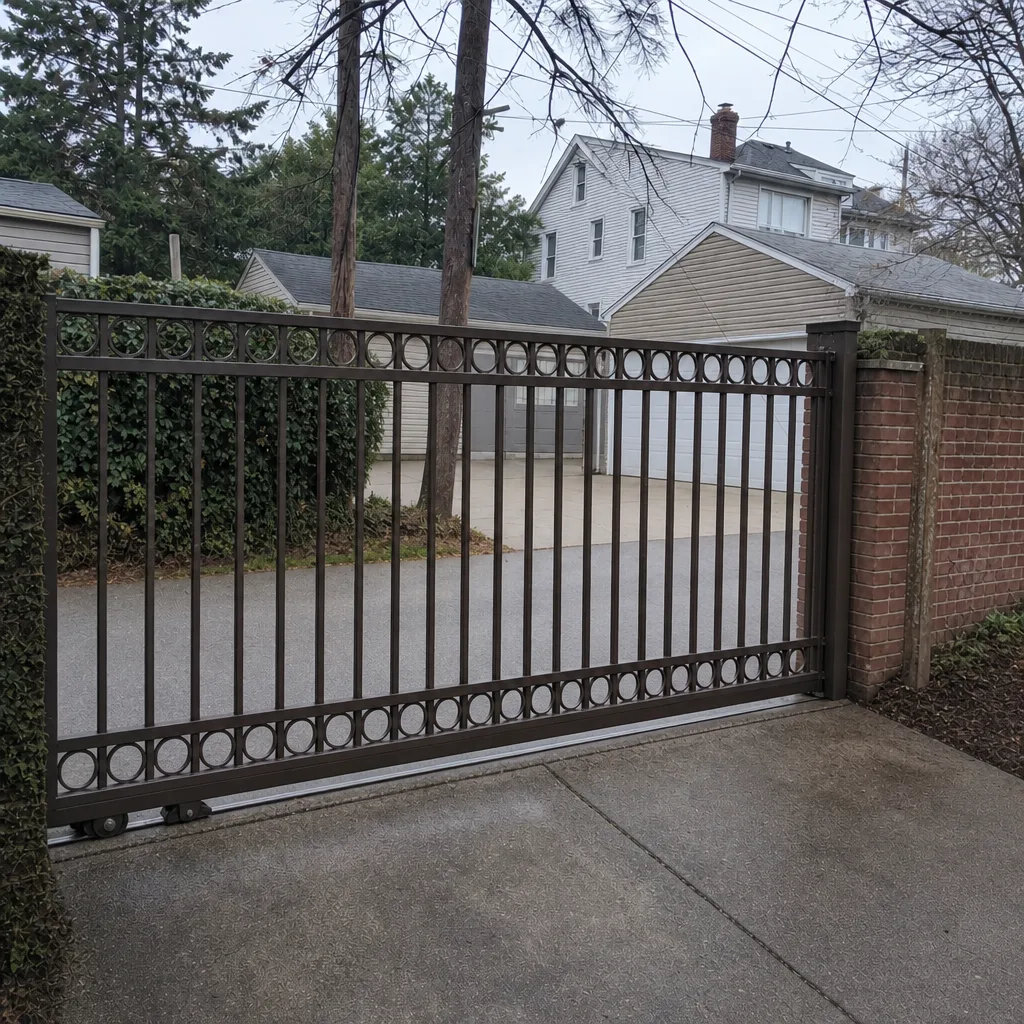
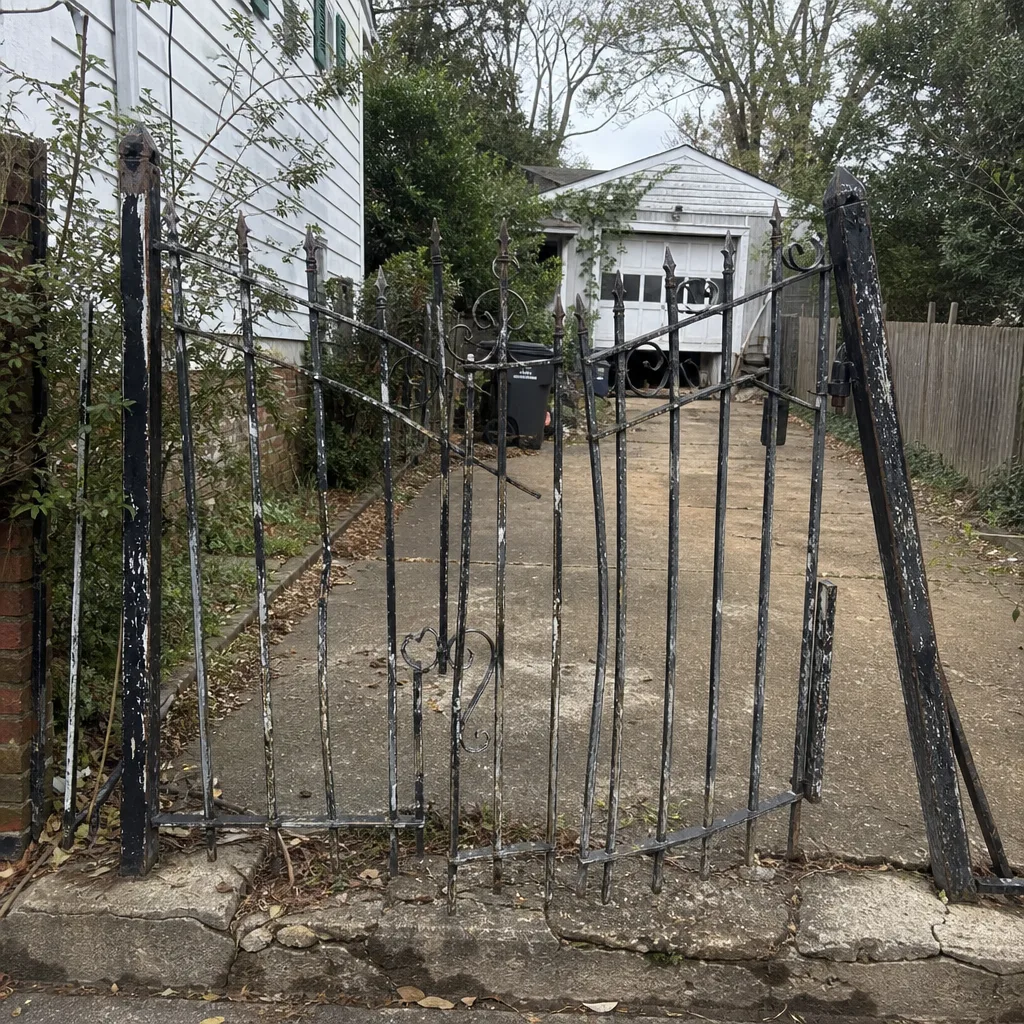
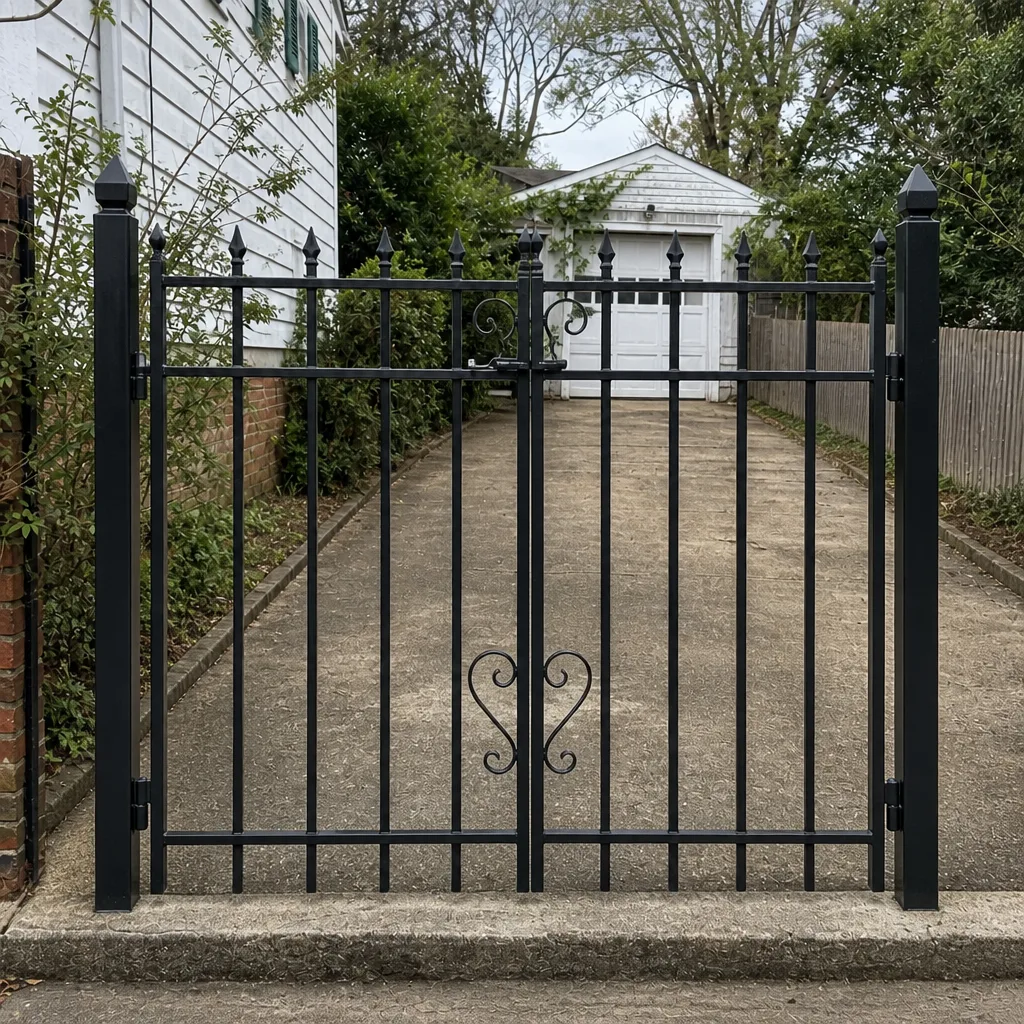
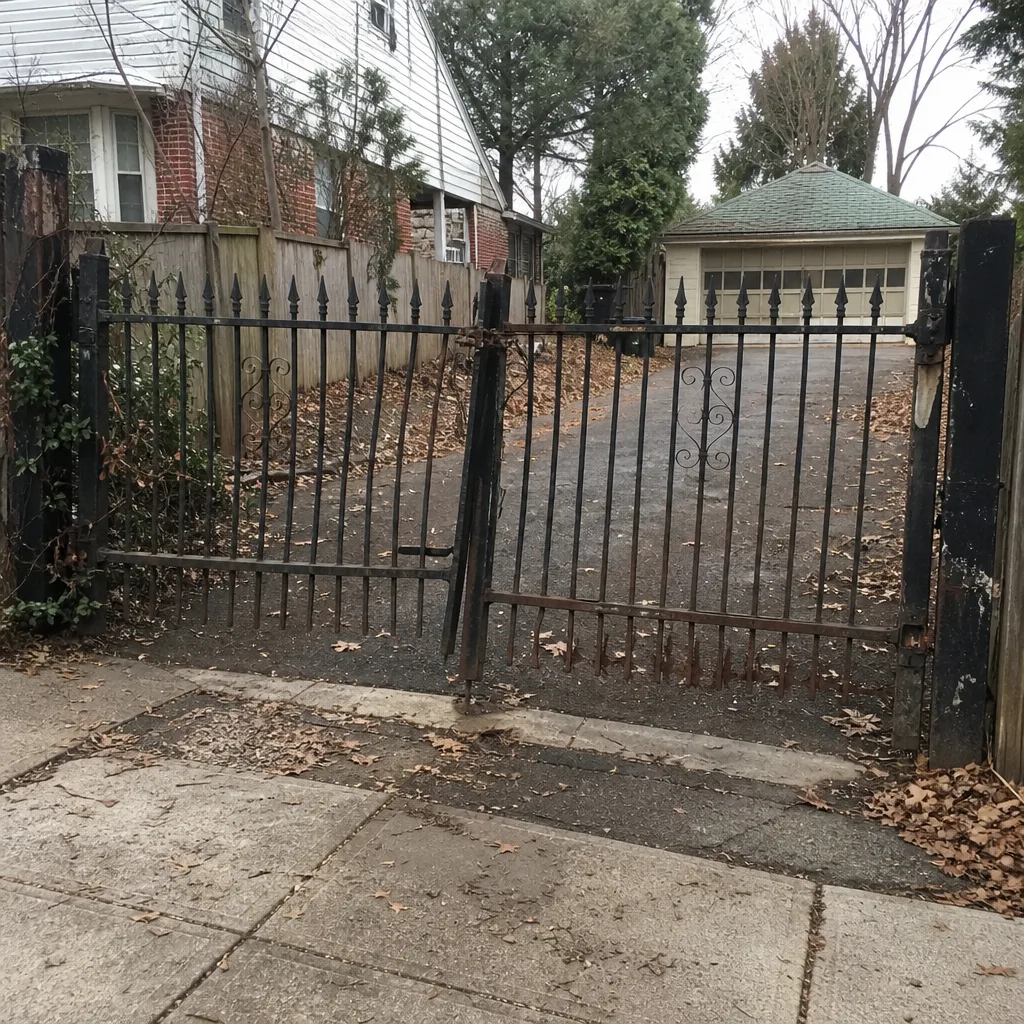
See the difference
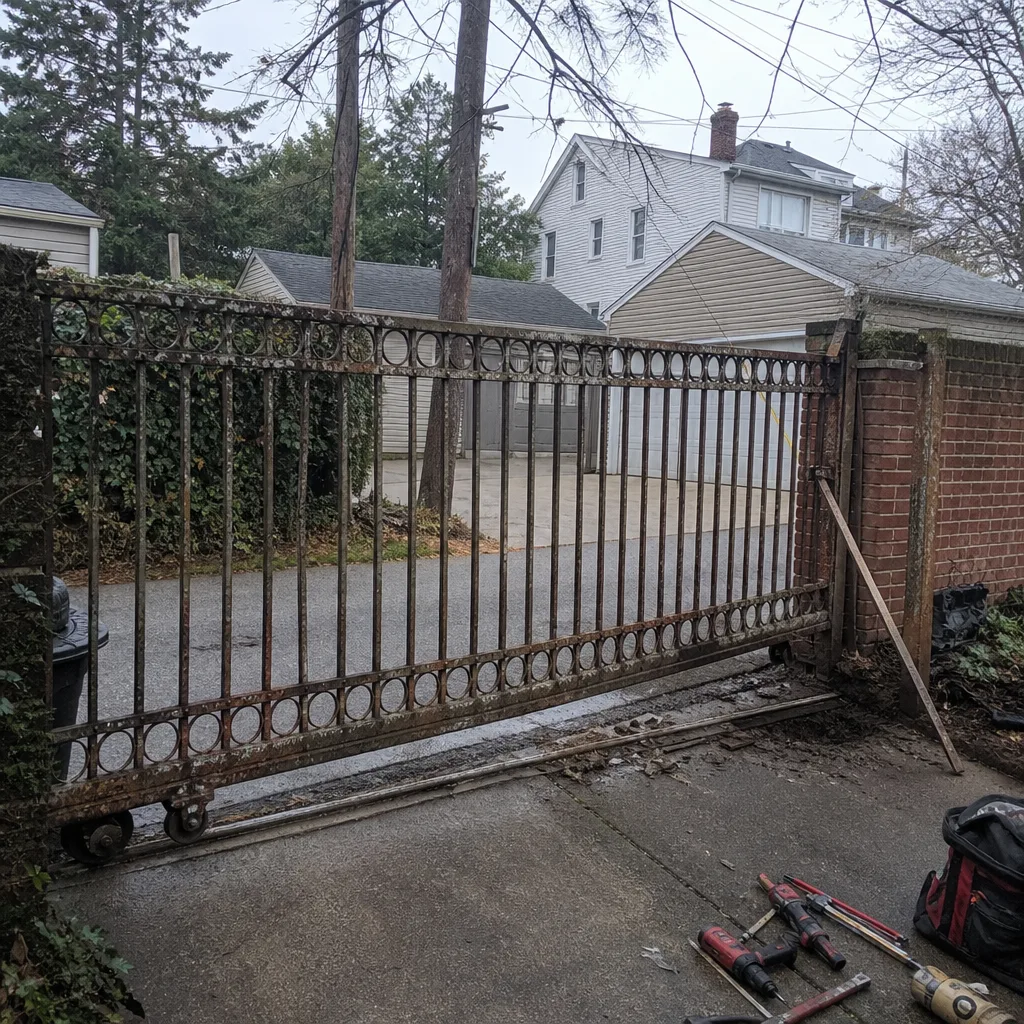 Before
 After
 Before
 After
 Before
 After
When to Call a Professional
Some things are worth checking yourself, and some aren’t. Call a technician when the gate is completely dead after you’ve confirmed power and the breaker. Call when a gate reverses or fails to reverse near an obstruction, because that’s a safety system, not a convenience. Call whenever the gate hums without moving, since a bind you can’t free means the operator is failing and parts are at risk. Call if there’s any damage to wiring, the control board, or the operator housing, and call whenever the gate misbehaves after a storm or a power surge.
Here’s how to think about it. If your troubleshooting stopped at the outside of the housing, a gate technician is the right call. We work on the brand you already have, and we diagnose by brand, not by guesswork. Gate Repair Washington offers free estimates in Washington; call (888) 260-4909. We answer 24/7. Fast dispatch from 7am to 7pm, Sunday through Friday, and same-day service is often available. We work on systems of every type, and we’re experienced with brands like Viking, Ghost Controls, DoorKing, and Elite. For a look at our main Washington page, you’ll find the full range of what we repair and install.
Frequently Asked Questions
A humming gate means the motor is working but the gate isn’t moving, which almost always points to a mechanical bind. Put the operator in manual release and push the gate by hand. If it moves freely, the problem is electrical; if it’s stiff, you’ve found the bind. Call (888) 260-4909 for an exact quote – estimates are free.
Watch the pattern. If the gate fails the same way every time, stopping at the same spot and reversing at the same point, suspect a limit switch. If it fails inconsistently, with erratic stops and flickering lights, suspect the control board. Either way, call (888) 260-4909 for an exact quote – estimates are free.
Sometimes, yes. A tripped safety sensor locks a gate closed and looks exactly like a dead one, and clearing the obstruction and checking the sensor alignment can bring it back in under two minutes. If it doesn’t, the sensor or its wiring needs a technician.
Washington’s humidity rusts hinges and builds resistance in summer, and freeze-thaw cycles shift posts and tracks in winter, so gates can develop binds with nothing actually broken. A gate that moves stiffly by hand in summer is already loading the operator and needs attention before it fails.
Never force a gate while the operator is engaged. Forcing it strips gears, bends the operator arm, and can void the warranty. Use the manual release to move the gate by hand, and if you’re unsure how to engage the release, stop and call a technician.
We handle the whole system: operators, control boards, safety sensors, loop detectors, and access-control components, not just the gate hardware. Electric gate repair on those components is a core service. Call (888) 260-4909 for an exact quote – estimates are free.
The Bottom Line
Most gate failures fall into five categories, and the symptom you see tells you which one you’re dealing with. A dead gate with no lights is power or board. A hum with no movement is a mechanical bind. A gate that reverses is usually a sensor, or a limit if it fails at the same point every time. A gate that stops early and inconsistently is a board. Diagnose by symptom before you call, run the three checks (power, sensors, manual release), and never force a gate by hand. In Washington, add the climate to your troubleshooting: humid summers and freeze-thaw winters loosen hinges, shift posts, and create binds months before a failure. Read symptoms first, and you’ll save time and repeat service calls. Call (888) 260-4909 for a free estimate. We answer 24/7. Fast dispatch from 7am to 7pm, Sunday through Friday.
Written by the team at Gate Repair Washington.