
Last updated November 15, 2026
 Wrought iron
 Wood & steel frame
 Farm & ranch
 Sliding driveway gates
 LiftMaster operators
Free on-site gate assessment - hinges, posts, and your LiftMaster or Nice gate operator checked before anything is quoted
The assessment is free and the quote is the invoice.
Get your free estimateGate Repair Warning Signs: A Washington Homeowner’s Reference Guide
The most expensive gate repair mistake in Washington isn’t ignoring a warning sign. It’s misreading one. A gate that grinds to a halt and a gate that shudders on its track can sound like the same failure to a homeowner, but they usually point to completely different parts. One might be a worn operator gear; the other, a failed limit switch or a loose post. Replace the operator when the real problem is a small sensor or switch and you’ve spent money on the wrong fix while the actual fault stays put. This guide breaks down what each sound, behavior and visual cue is really telling you, how to sort a safety emergency from something you can schedule, and what’s specific to the gates around Washington.
Quick Answer
Gate warning signs break into four groups: sound (grinding, clicking, humming), behavior (slowing down, reversing, stopping partway), power (dead operator, tripped breaker) and structure (sagging, dragging, wobbling posts). Each group points to a different set of components. Intermittent failures are more urgent than consistent ones because they usually mean a loose connection, a failing sensor or a temperature-sensitive component that’s already on its way out. Any sign that a gate could crush, drop or swing uncontrolled is a shutdown-now safety issue, not a repair-to-schedule issue.
Styles & brands we work with
- Wrought iron
- Wood & steel frame
- Farm & ranch
- Sliding driveway gates
- LiftMaster operators
Table of Contents
- The Symptom-to-Component Matrix: What Each Sign Actually Means
- Why Intermittent Failures Are More Urgent Than Consistent Ones
- Post Movement vs. Hinge Wear vs. Operator Mounting Failure
- Safety Shutdown vs. Monitored Repair: How to Tell the Difference
- Warning Signs Specific to Slide Gates vs. Swing Gates
- Electric Gate Warning Signs: Operator, Control Board and Sensors
- How Washington’s Temperature Swings Accelerate Gate Wear
- How a Technician Diagnoses by Brand, Not by Guesswork
The Symptom-to-Component Matrix: What Each Sign Actually Means
Here’s the single most useful thing you can learn from this guide: match the symptom to the likely component before you call anyone, because it changes what the conversation is about. Below is our working matrix – the same one our technicians run through mentally when they arrive at a Washington property.
Sound-based signs
- Grinding or metal-on-metal scraping: usually a worn gear in the operator, a dry or failing bearing, or a chain that’s jumped its sprocket. It rarely means the motor itself is dead.
- Rhythmic clicking during travel: often a limit switch or an encoder losing position, so the operator keeps hunting for its stop point.
- Loud humming but no movement: the motor is getting power but the drive train is jammed – a stuck gear, a seized roller, or a mechanical bind in the gate leaf.
- A single sharp clunk at start or stop: loose hardware, a worn hinge pin, or an operator mount that’s working loose.
Behavior-based signs
- Gate slows down noticeably: friction increasing in the hinges, rollers or track, or a failing motor winding losing torque.
- Reverses or stops partway: a sensor or loop detector seeing a phantom obstacle, a misaligned safety edge, or a control board fault.
- Starts only when you hold the button: a stuck “hold to run” state, usually a sensor that never sees a clear path.
- Opens but won’t close (or vice versa): a one-directional limit setting or a photo-eye that’s blocked or misaligned.
Notice how many of these point to small, cheap components – limit switches, sensors, loop detectors – rather than the operator unit itself. That gap between what a homeowner hears and what the gate actually needs is exactly where money gets wasted. When you do need us, we run a proper electric gate repair diagnostic rather than a parts swap.
Why Intermittent Failures Are More Urgent Than Consistent Ones
It sounds backwards, but a gate that fails half the time is often in worse shape than a gate that has stopped completely. When a gate fails every time, the fault is static and predictable: a broken part is broken. When a gate fails intermittently, something is moving in and out of its failure state – a loose wire, a heat-sensitive control board, a sensor that drifts with temperature, a connector that loses contact when the housing expands.
In Washington, intermittent gate faults are almost a seasonal event. The region swings from humid summer heat to hard winter cold, and a lot of it happens over a single day: a morning near freezing and an afternoon twenty degrees warmer isn’t unusual here. Every material in the gate system – the steel of the operator housing, the control board’s solder joints, the plastic connectors, the gate’s own frame – expands and contracts on that cycle. A connection that’s marginal can hold all summer and fail every cold morning.
Common causes of intermittent gate failures
- Loose or corroded wire terminations at the operator, the control board or the safety devices. The circuit tests fine until vibration or temperature breaks contact.
- Heat- or cold-sensitive control board components. Solder joints crack over time; the board works when cool and drops out when warm, or the reverse.
- Marginal battery backup. Many operators run on a backup battery. A weak one behaves normally on a warm day and fails under load on a cold one.
- Photo-eye or loop detector drift. Sun angle, frost, debris or a slight knock out of alignment puts a safety sensor in and out of its beam path.
- Failing limit switches. The switch itself may be partly worn, catching the cam only on certain passes.
A gate that fails intermittently tells you a component is already degraded. You’re getting a warning before the full failure, and that’s a good position to be in. Call it in while you still have a gate that mostly works. Gate Repair Washington handles this exact kind of ghost fault all the time.
Post Movement vs. Hinge Wear vs. Operator Mounting Failure
Stand back from the gate and watch it move. Three failures look almost identical to a homeowner – a gate that drags, sags or wobbles – but they need three completely different repairs, and fixing the wrong one is a waste of money that leaves the real problem in place.
How to tell them apart
- Post movement. The gate post itself is leaning or shifting in the ground. Watch the top of the post against a fixed reference – a wall, a roofline – as the gate opens and closes. If the post rocks even slightly, you’ll see it at the top. A shifting post means the footing is loosening, which is very common in Washington’s clay-heavy soil after wet seasons. This is a structural issue, and no hinge or operator adjustment will fix it.
- Hinge wear. The post is solid and the operator is working normally, but the gate leaf droops, drags at the bottom, or takes a wobble as it swings. The hinge pins or hinge plates are worn, bent or loose. This shows as play at the hinge itself when you try to rock the gate by hand near the hinge side.
- Operator mounting failure. The post and hinges are fine, but the operator arm or mount is loose, bent or misaligned. It shows up as a gate that swings fine by hand but jerks, binds or grinds only when the operator is running. Loose operator brackets put stress into the gear and the gate frame every cycle.
Here’s the shortcut: disconnect the operator (on a manual-release gate) and swing the gate by hand. If it swings smoothly, the operator or its mounting is the problem. If it still drags, catches or wobbles, the fault is in the hinges, rollers or posts. That single test tells you more than any sound.
Safety Shutdown vs. Monitored Repair: How to Tell the Difference
An automated gate is a moving, powered, heavy piece of equipment, and some failures are genuinely dangerous. Others aren’t. Knowing which is which tells you whether to stop using the gate entirely or keep an eye on it while you book a technician.
Stop using the gate immediately if:
- The gate moves when nobody has triggered it. Uncommanded motion is the highest-priority fault – it usually means a control board, a sensor or an operator is malfunctioning and can’t be trusted to stop.
- A safety device (photo-eye, loop detector, safety edge) has failed, been damaged or been bypassed. A gate that closes without checking its path is a crush hazard. This is not a “wait until next week” condition.
- The gate has come off its track, or a slide gate has jumped its guides. Used again, it can bind, drop or pull its post over.
- A heavy gate leaf is drooping far enough to snag the ground or the frame while the operator is pushing it. The operator can tear a gate from its hinges or bend the frame.
- You see exposed, damaged or wet wiring, or a tripped breaker that keeps tripping. Electrical faults around an outdoor gate are a shock and fire hazard. Don’t reset a breaker a second time; call an electrician or gate specialist.
- The operator housing is hot enough to touch or smells like burning. Stop, unplug everything you can safely reach, and call.
Schedule a repair, don’t panic, if:
- The gate works reliably but the cycle is slower than it used to be.
- There’s a new noise – grinding, clicking, running rough – but the gate still completes its cycle.
- The gate leaf wobbles or a hinge looks slightly worn, but the gate travels smoothly and safely.
- A limit stop is slightly off, so the gate stops a little short of or past where you’d like it.
- The gate works on a manual release but not the operator, and nothing moves on its own.
If anything on the “stop” list applies to you, close the gate by hand (if safe), lock it or leave it open, and call. Gate Repair Washington answers the phone with an actual gate specialist because gate work is our only work.
Warning Signs Specific to Slide Gates vs. Swing Gates
Homeowners often conflate slide and swing gate warning signs, but the two designs fail in very different ways. Knowing which type you own sharpens your diagnosis.
Swing gates
- Dragging along the ground is a swing-gate classic. It points to hinge wear, a sagging post, or a gate leaf that’s dropped – all made worse by a mount that’s working loose.
- Bouncing or jerking mid-swing points to a hinge binding, a worn operator arm, or a limit switch that’s set wrong.
- Reversing suddenly on the way through almost always means the safety sensor is seeing something it shouldn’t – a loop detector or safety edge triggering on a phantom.
- Lateral wobble at the hinge side points to hinge wear or post movement rather than operator problems.
Slide gates
- Jumping its track or grinding up a rise points to worn rollers, a rail that’s moved or shifted, or debris in the track. Slide gates rely on the track being true, so even a small shift shows up fast.
- Slow, labored travel is usually a roller or track issue, or a failing drive gear, not the motor.
- Stops in the wrong place points to a limit or encoder fault – slide gates rely on precise stops.
- Gap opening at the catch post points to a post that’s shifted – a slide gate’s post alignment is critical to it working at all.
- Racking or leaning in the gate panel is a structural slide-gate symptom; when the panel twists, the gate starts binding on its own frame. This is a serious sign, and on a heavy gate it can lead to the panel coming off its track.
If you’re not sure which type you have, note whether the gate swings open on hinges or rolls along the ground or a rail – that alone will get a technician pointed in the right direction.
Electric Gate Warning Signs: Operator, Control Board and Sensors
An electric gate is a system of parts, and a fault in any one of them shows up as a gate problem. The trick is separating the operator (the thing that moves the gate) from the control board (the thing that tells it what to do) from the safety sensors (the things that stop it). Here are the warning signs specific to each part.
Operator warning signs
- The gate moves slowly, or hesitates at start or during travel.
- Grinding, whining or growling from the operator housing.
- The gate runs but the operator housing is unusually hot.
- Manual operation feels fine, but the operator can’t lift the gate.
Control board warning signs
- Uncommanded motion.
- The gate stops mid-travel, or only in one direction.
- Relays or the operator click endlessly with no movement.
- The gate forgets its limit positions, so it stops in the wrong place.
- Fault lights on the control board, if it has them.
Safety sensor and access-control warning signs
- The gate reverses on its own, or refuses to close.
- Vehicle loop detectors that don’t see a car.
- Keypads, remotes or intercoms that only work intermittently.
- A gate that responds to only some remote buttons.
Electric gate repair at this level means the operator, control board, sensors and wiring all get tested as a system. We work on the brands you already have – LiftMaster, FAAC, BFT, Linear, Viking, Ghost Controls, DoorKing, Elite and Mighty Mule – and we diagnose by brand logic, not by swapping parts until the gate works.
How Washington’s Temperature Swings Accelerate Gate Wear
Gates in Washington face a specific combination of weather that wears mechanical and electrical parts fast. It’s a humid, four-season climate with a lot of freeze-thaw cycling in winter and heavy summer humidity, and both of those things work on a gate in ways a resident elsewhere might not see.
What the Washington climate does to a gate
- Freeze-thaw cycling loosens gate posts and moves tracks. Water gets into a footing, freezes, expands, and opens up a small gap; a few seasons of that and the post starts to shift. After a wet winter, a gate that was fine in the fall starts dragging or binding.
- Humidity works on steel hinges, chains and operator housings. Corroded hinge pins bind; a corroded chain jumps; a rusty spring or arm can fail. Gates in Washington benefit from hardware inspected after wet seasons rather than only when they stop working.
- Temperature extremes affect control boards, backup batteries and photo-eyes. A hot summer can drop out a weak control board; a cold snap can stop a weak battery or shift a marginal sensor.
- Storm debris – wind-blown leaves, twigs and grit – gets into slide-gate tracks and swing-gate hinges, causing drag and false sensor trips.
In our experience, most warning signs on a Washington gate appear at a change of season. If your gate is starting to act up at the start of summer or the start of winter, the season is the trigger, not the cause – something has been wearing for months.
How a Technician Diagnoses by Brand, Not by Guesswork
Gate brands aren’t interchangeable. A symptom on a LiftMaster sliding gate and the same symptom on a Ghost Controls swing gate point to different parts because the two brands use different operator designs, control boards and safety logic. That’s why “we work on all brands, so we just guess” is a bad sign. Here’s what a real diagnosis looks like.
What a proper diagnostic covers
- Confirm the cycle and the symptom. How often it fails, whether it’s temperature-dependent, and whether it’s the same every time or intermittent.
- Test the operator apart from the safety logic. That means testing the motor and drive alone, and the control board and safety sensors separately – so a control board fault doesn’t get misdiagnosed as a motor failure.
- Walk the safety circuit. Photo-eyes, loop detectors, safety edges and any access controls are tested as a chain, because one phantom trigger causes most “reverses on its own” complaints.
- Check the mechanics and foundation. Hinges, rollers, tracks, posts and operator mounts get tested by hand as well as under power.
- Read the brand’s own logic. Each brand’s control board and limit/encoder setup has its own patterns. On a DoorKing access system, for instance, a gate that won’t respond to a keypad is usually an access-control issue, not an operator one. On a Viking swing operator, a slow start usually points to the operator arm, not the control board.
Diagnosing by brand rather than trial and error is the whole reason we focus exclusively on gates. We don’t split our attention between gates and unrelated trades, so when we arrive at a Washington property we’re there to solve one problem.
Common Mistakes to Avoid
- Replacing the operator when the problem is a small component. A limit switch, photo-eye, loop detector or a worn gear is a much cheaper fix than a new operator. If a technician suggests an operator replacement before testing the safety circuit and limits, ask what those tests showed.
- Ignoring an intermittent failure until it becomes permanent. A gate that fails occasionally is telling you a part is already degraded. Waiting means fixing it later, often at a worse moment – and it can mean further damage to the operator.
- Pushing a binding gate with the operator. A gate that drags or binds and keeps getting driven by the operator can tear a hinge from its post, bend the operator arm, or strip the operator gear. Fix the friction first; don’t drive the gate.
- Bypassing or “taping over” a safety device. A photo-eye, loop detector or safety edge that’s been bypassed is a crush hazard. It’s never a fix, and it can put people at risk. Get it repaired.
- Mistaking post movement for hinge wear. They look alike, but tightening the hinges won’t fix a shifting footer. Watch the top of the post against a fixed point – if it moves, that’s a structural issue.
- Assuming a slide gate and swing gate share the same symptoms. A slide gate’s failure is often in its track or rollers; a swing gate’s is often in its hinges or operator mounting. Different diagnosis, different fix.
- Putting off a seasonal check on a Washington gate. Most gate failures trace back to wear that built up over a wet winter or a humid summer. Checking hinges, tracks, chains and operators after each wet-to-dry change catches most of them early.
See the difference
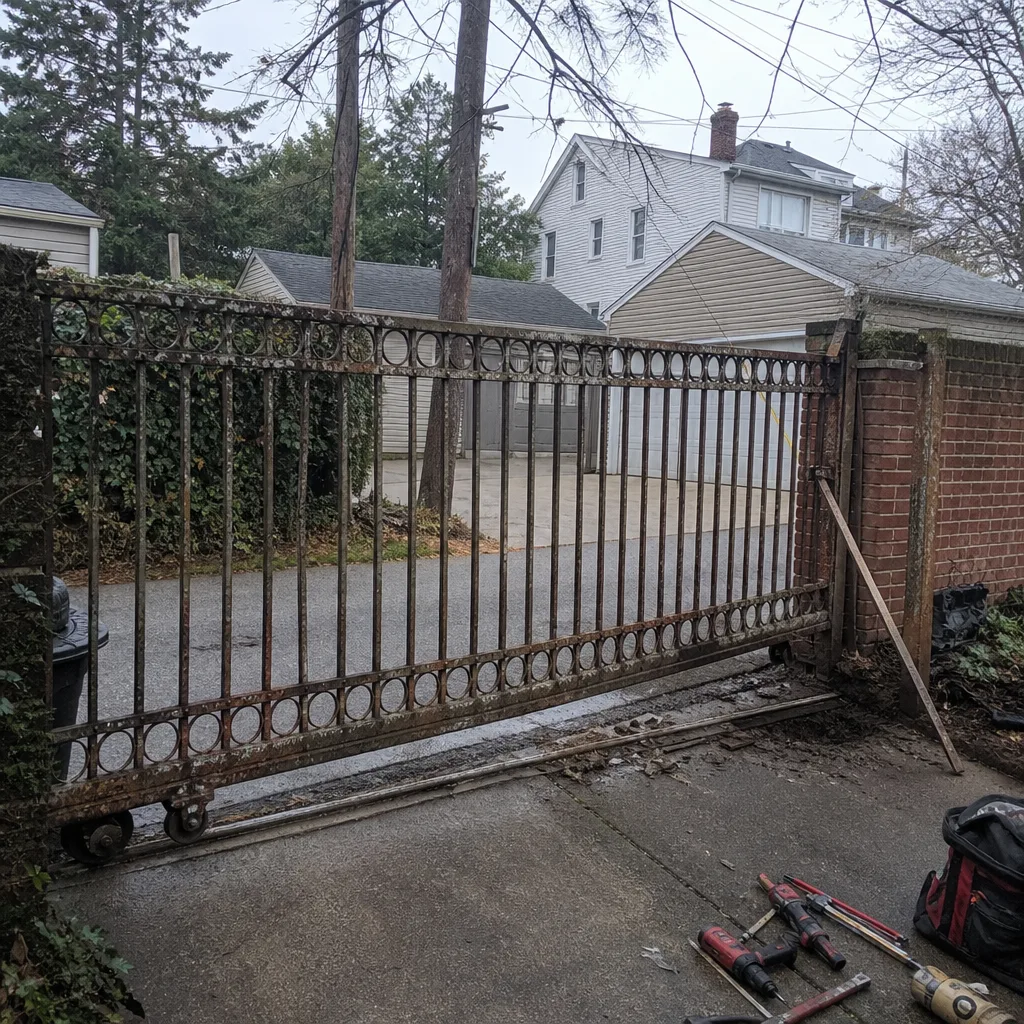 Before
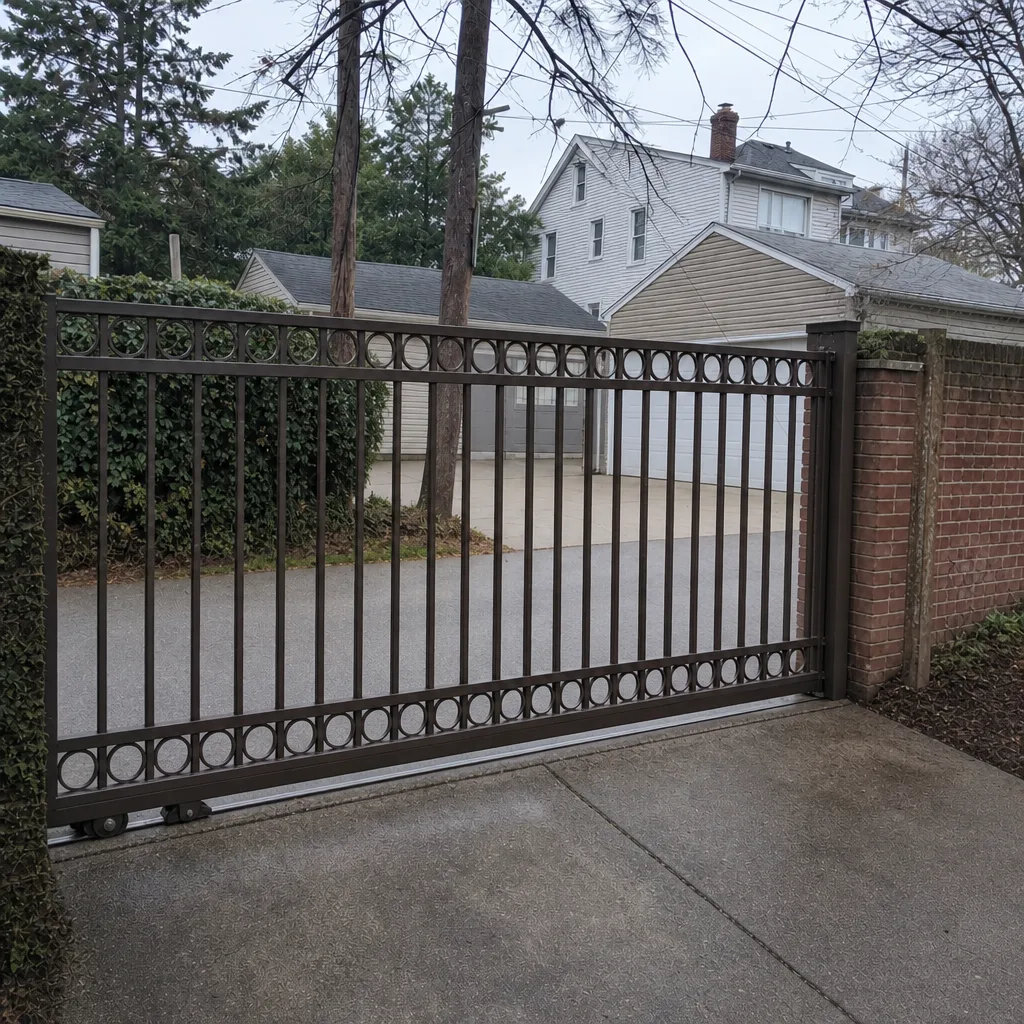 After
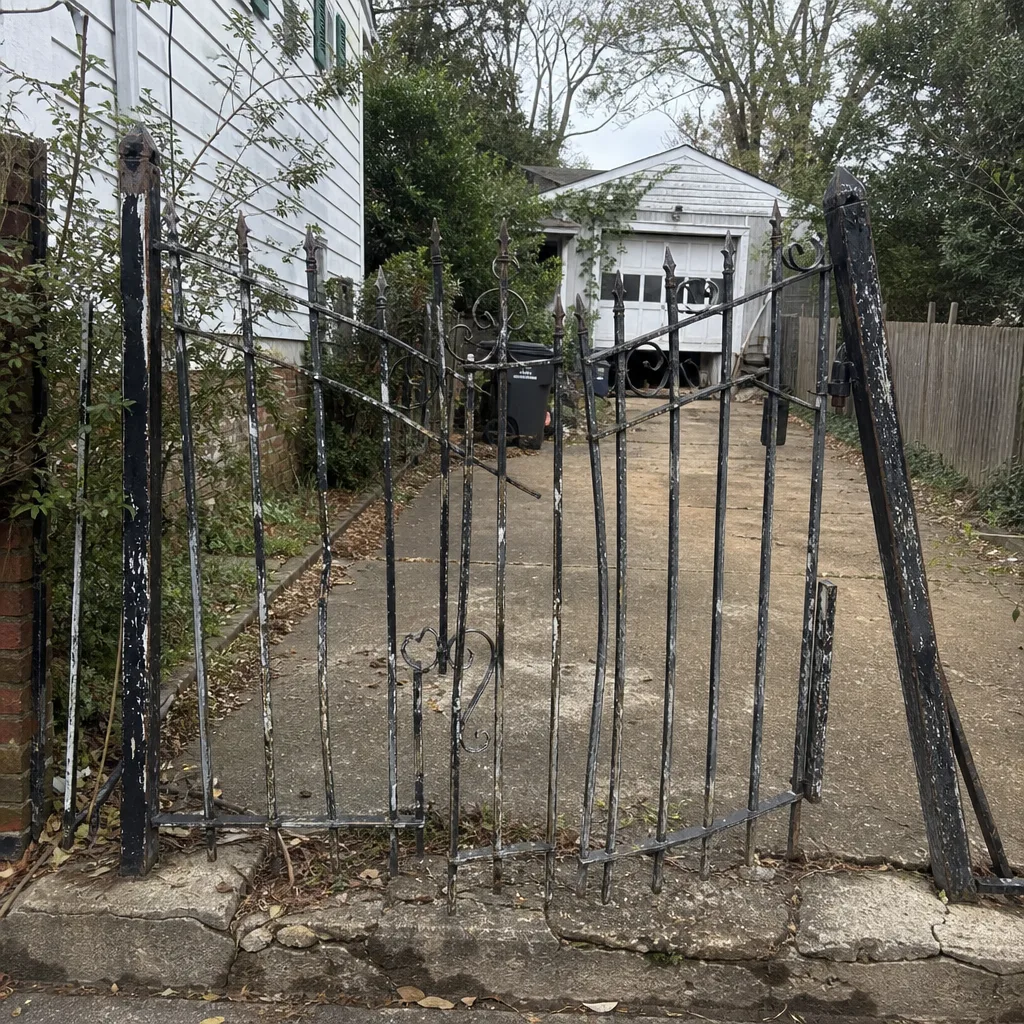 Before
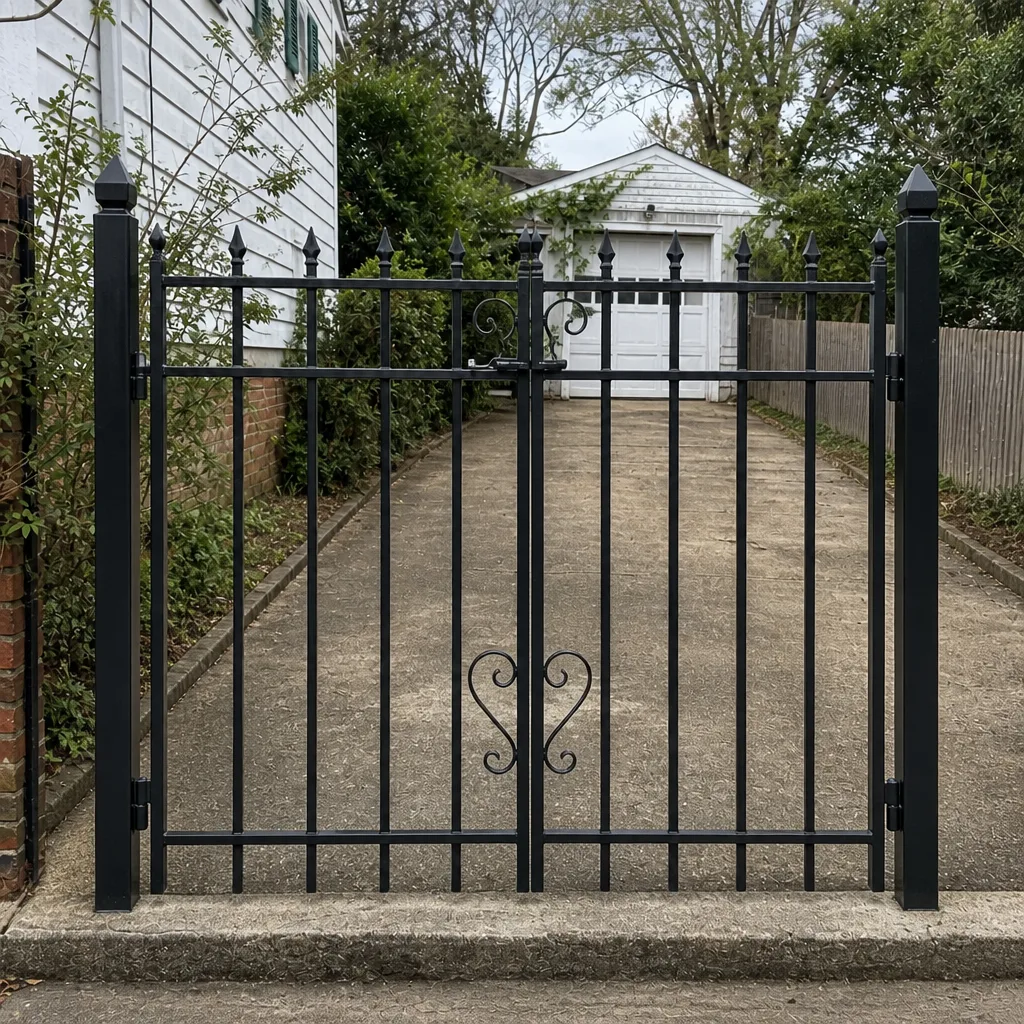 After
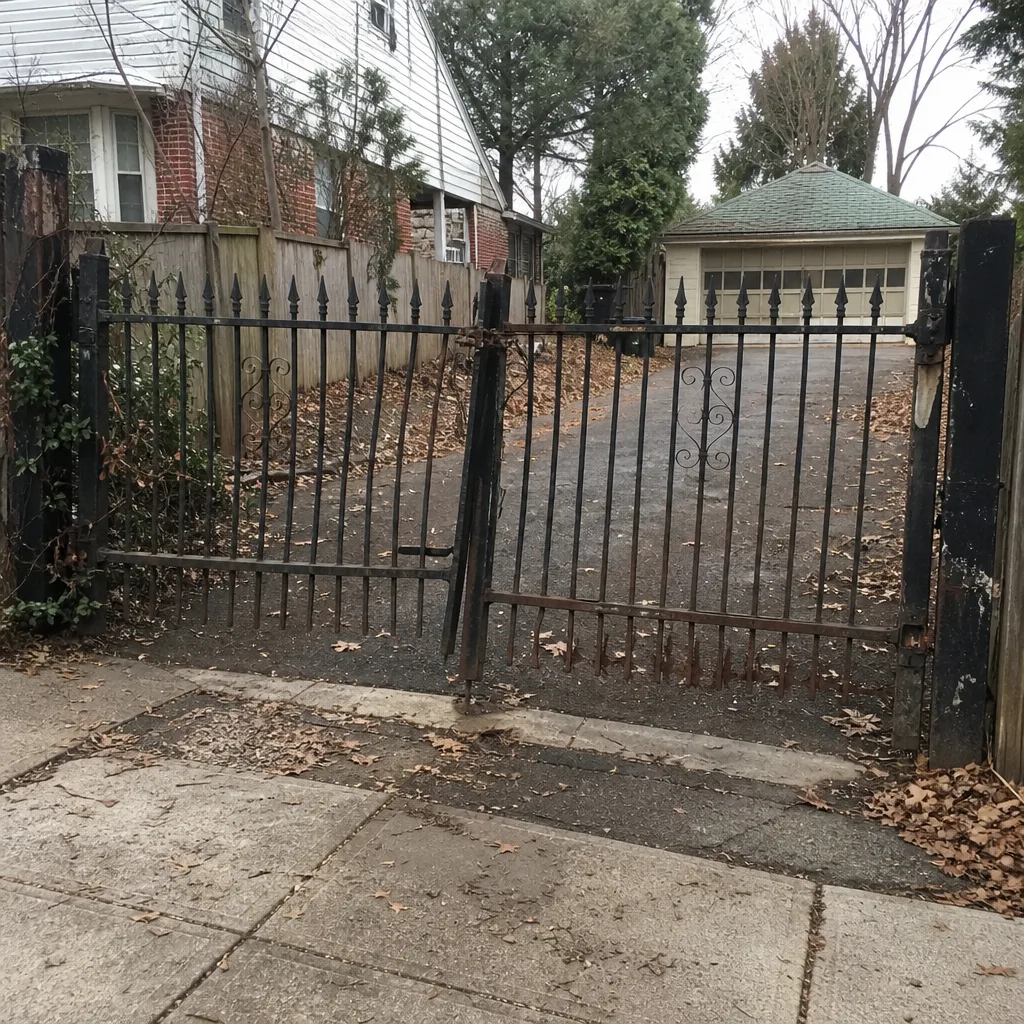 Before
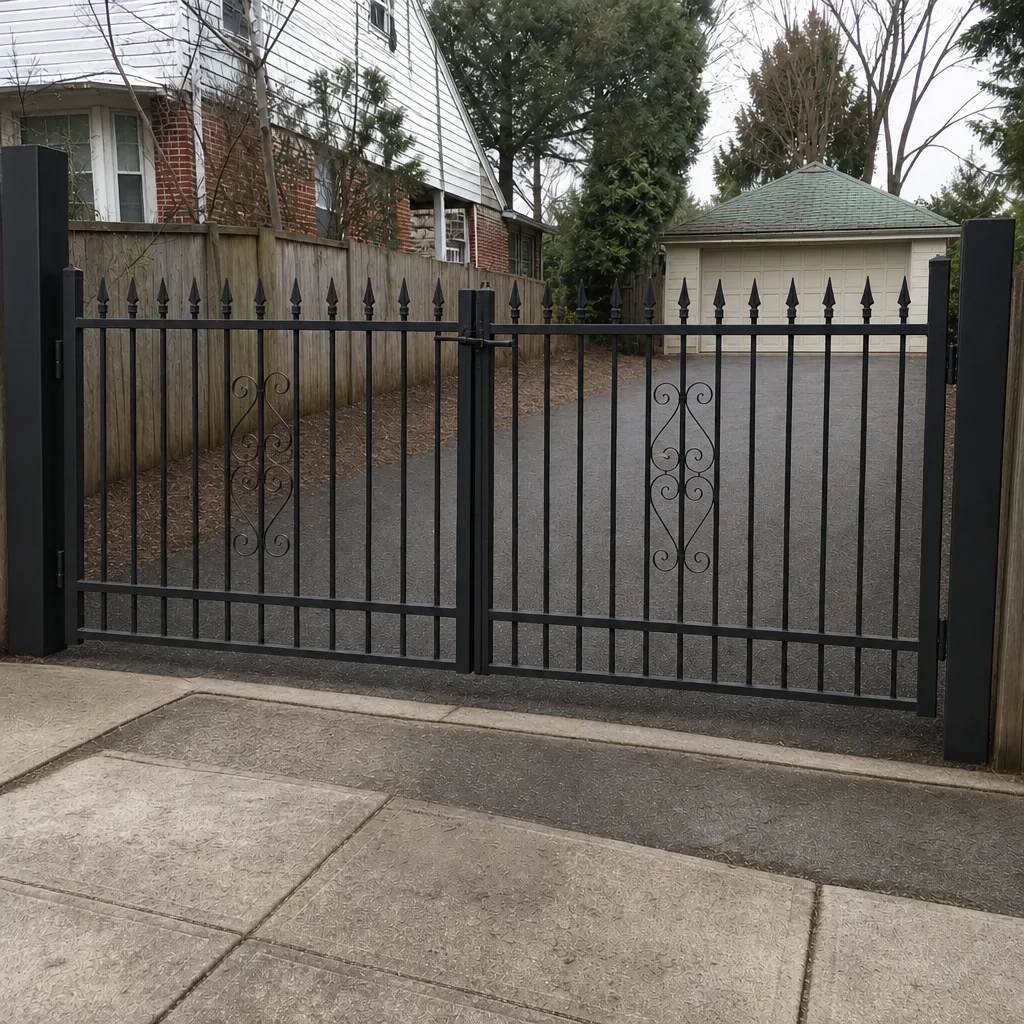 After
When to Call a Professional
Call a specialist when the failure is electrical, when a safety device has failed, when the gate has come off its track, or when you’ve matched a symptom to the likely component and it’s beyond a simple adjustment. Those are the cases where guessing costs more than diagnosing. Call immediately if the gate moves on its own, if a safety sensor has been bypassed or is damaged, if you see a tripped breaker you can’t reset, or if you smell burning near the operator. On the other side, a grinding operator, a slow cycle, a wobbling hinge or a post that’s starting to lean can be booked as a scheduled repair – just don’t keep driving a binding gate. Gate Repair Washington offers free estimates in Washington – call (888) 260-4909. We answer 24/7. Fast dispatch from 7am to 7pm, Sunday through Friday.
Frequently Asked Questions
Grinding, dragging or slowing during the cycle is the most common warning sign, and it usually points to friction in the hinges or rollers, a worn gear, or a post that’s shifted – not a dead motor. The gate is telling you a mechanical part is wearing, and it’s worth booking a repair before the operator is forced to drive through the drag. Call (888) 260-4909 for an exact quote – estimates are free.
An intermittent failure almost always means a loose or corroded connection, a temperature-sensitive control board, a weak backup battery, or a safety sensor that drifts in and out of alignment. Intermittent faults are often more urgent than steady ones because a part is already degraded and getting worse. In Washington, temperature swings make intermittent faults especially common at the start of a new season. Call (888) 260-4909 to book a diagnostic.
Yes. A gate that reverses without a trigger has a control or safety fault – usually a photo-eye, loop detector or safety edge that’s misaligned, blocked or failing. Until it’s repaired, use the gate by hand and keep it out of automated service, since a gate that reverses unpredictably can close on someone. Call (888) 260-4909 to get it checked.
Disconnect the operator and swing the gate by hand. If it still drags, wobbles or binds with the operator off, the fault is in the hinges, rollers, posts or track. Watch the top of the post against a fixed reference: if the post itself rocks, it’s a footing problem, not a hinge. Hinge wear and post movement need different repairs, and getting it right matters. Call (888) 260-4909 to confirm.
Yes. Slide gates usually fail at the track, rollers or catch post, and a gate that jumps its track is a shutdown-now issue. Swing gates usually fail at the hinges, operator mount or safety sensors. Treating the two the same can send a technician after the wrong part – and on a heavy gate, a slide gate that’s come off its track can drop the panel. Call (888) 260-4909 for the right diagnosis.
Only if the warning sign is on the monitored list: a slow cycle, a new noise, a slightly worn hinge or a minor limit adjustment. Stop using it immediately if it moves on its own, if a safety sensor has failed, if it’s come off its track, or if you see damaged wiring or a breaker that keeps tripping. When in doubt, lock the gate open or closed by hand and call (888) 260-4909.
The Bottom Line
Gate warning signs aren’t interchangeable. A grinding noise, a slow cycle and an intermittent stop each point to different failing components, and the surest way to overspend on a gate repair in Washington is to replace the operator before testing the small parts – limit switches, sensors, loop detectors, hinges and posts. Watch the symptom, match it to the component, and sort safety issues from scheduled ones. Intermittent faults deserve prompt attention, and slide gates and swing gates need separate diagnosis. Ready for a proper gate repair assessment in Washington? We work on the brand you already have – whether that’s a DoorKing, an Elite, a Ghost Controls or any of the other major brands – and we diagnose by brand, not by trial and error. From operator failure to full installation, our technicians have up to experience. Call (888) 260-4909 for a free estimate. We answer 24/7. Fast dispatch from 7am to 7pm, Sunday through Friday.
Written by the team at Gate Repair Washington.