
Last updated November 15, 2026
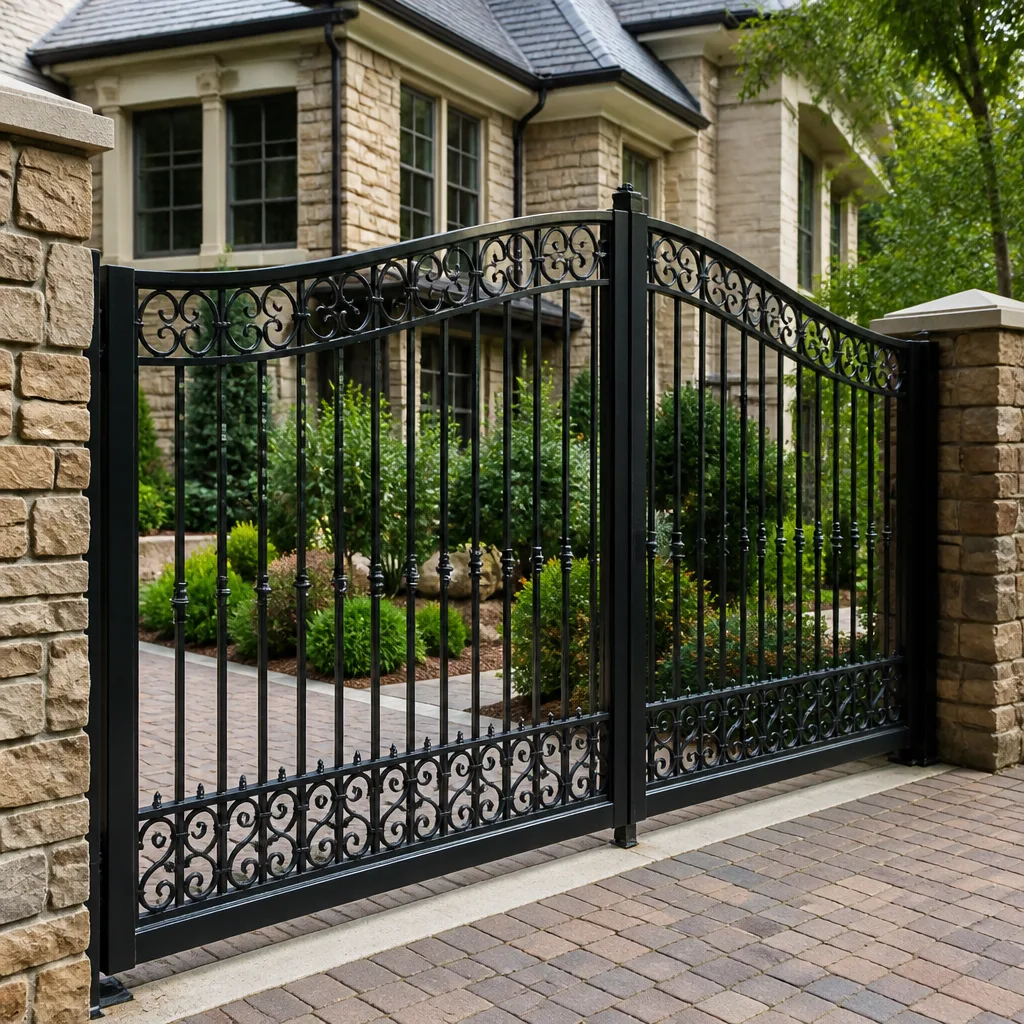 Wrought iron
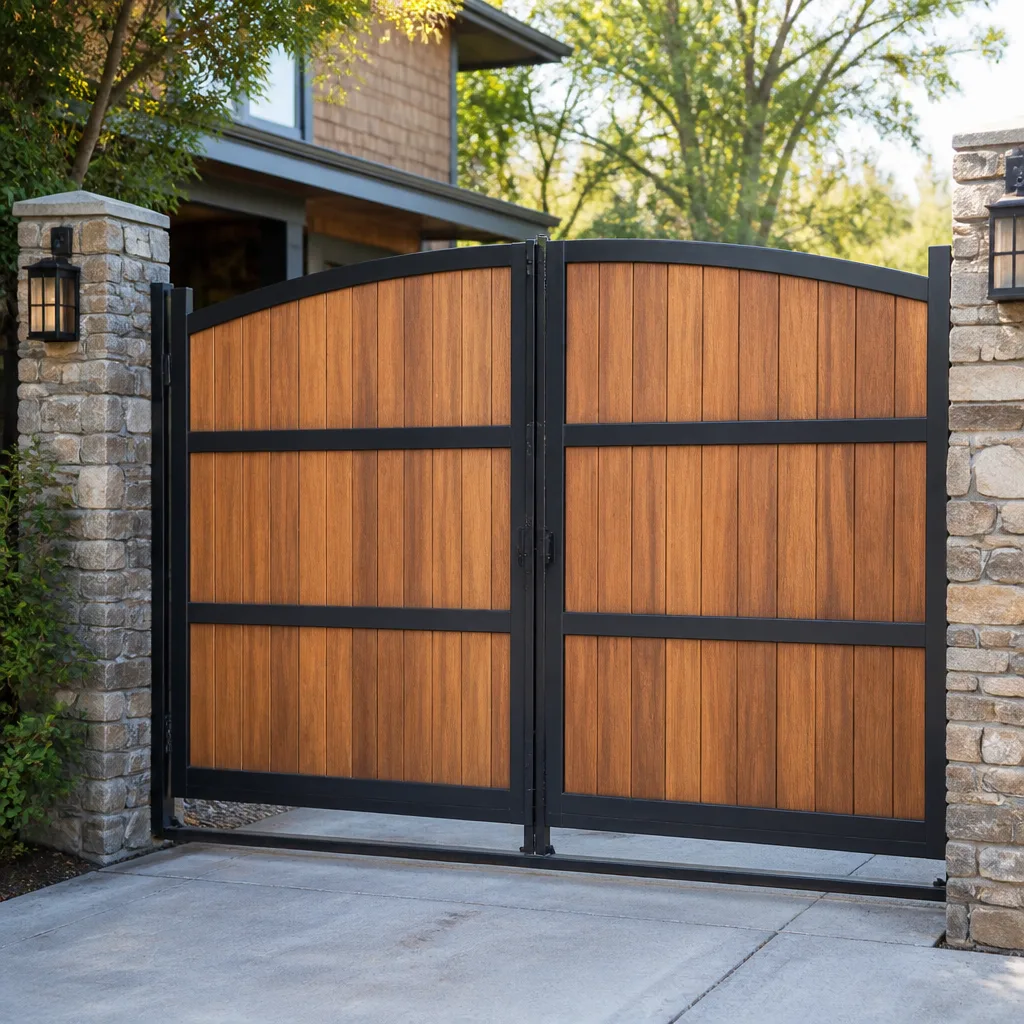 Wood & steel frame
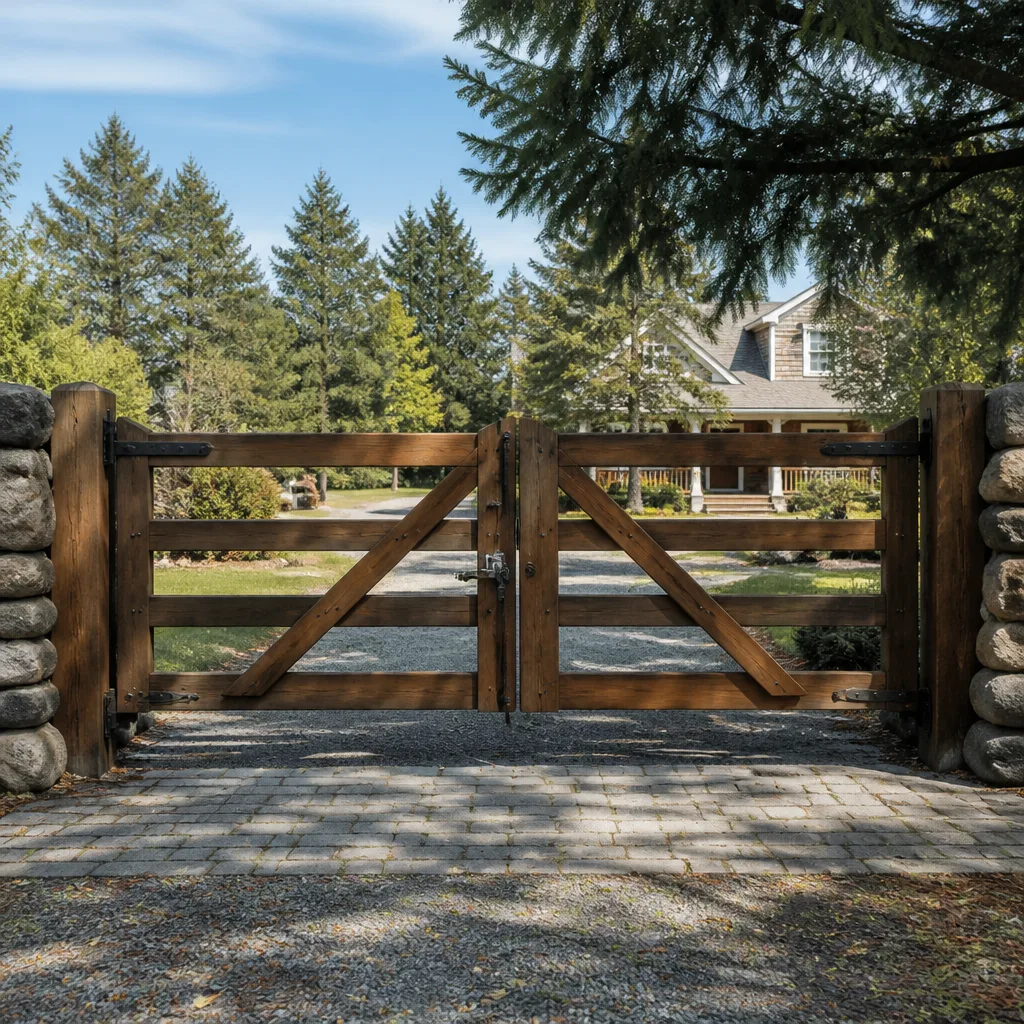 Farm & ranch
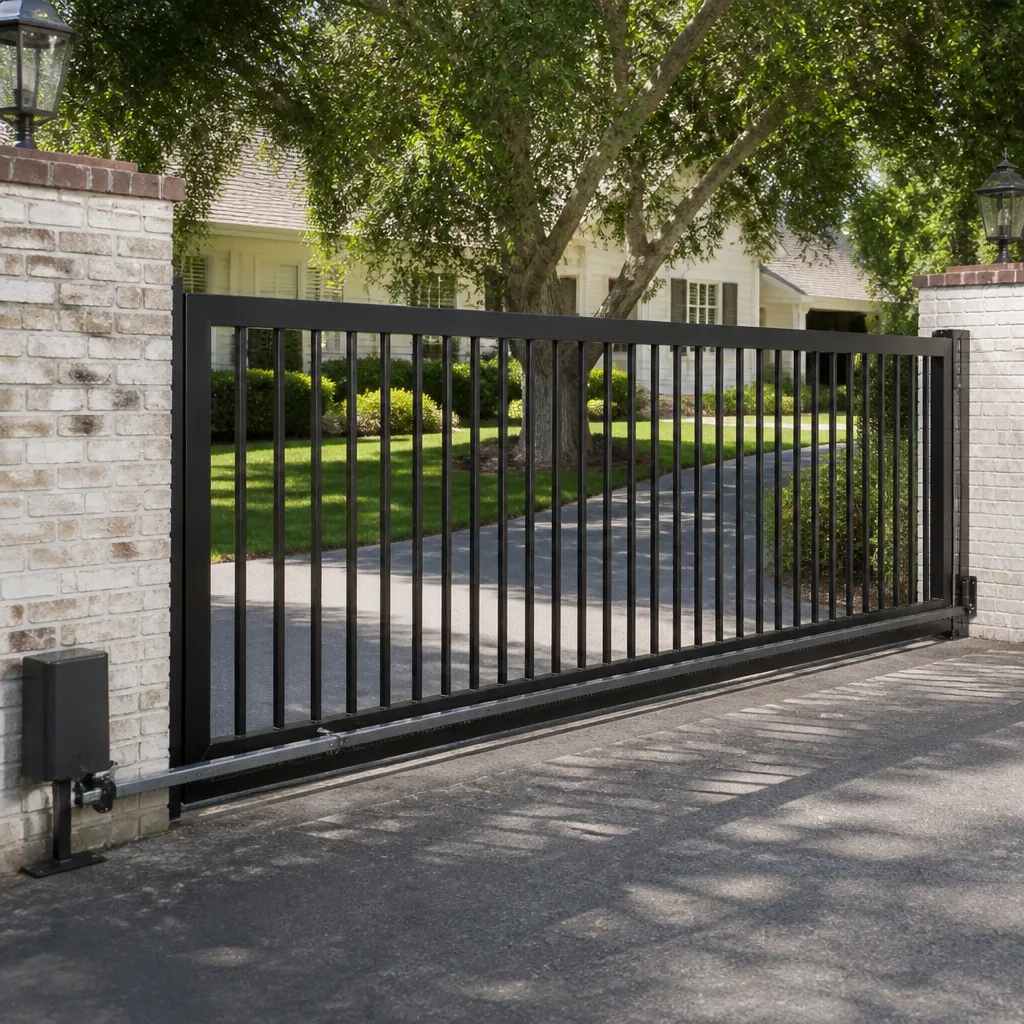 Sliding driveway gates
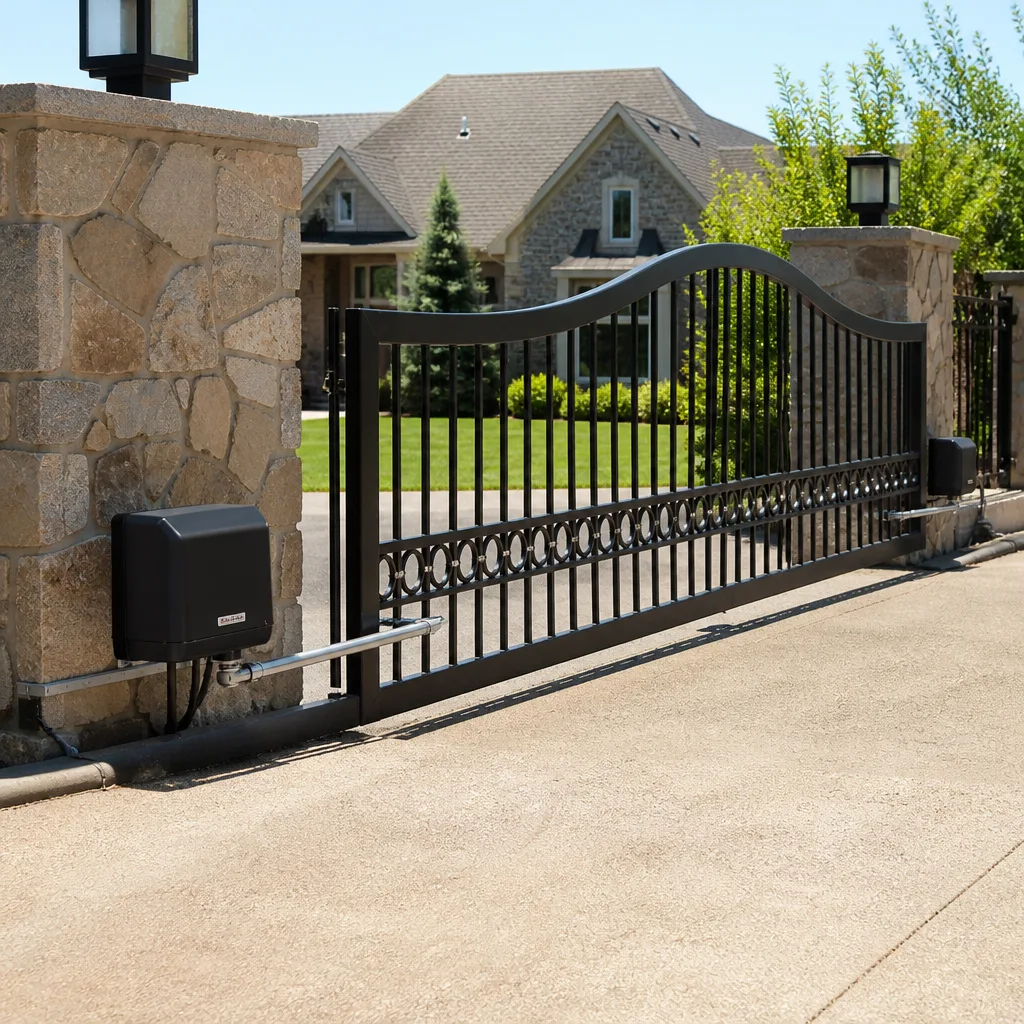 LiftMaster operators
Free on-site gate assessment - hinges, posts, and your LiftMaster or Nice gate operator checked before anything is quoted
The assessment is free and the quote is the invoice.
Get your free estimateGate Repair Emergency Preparedness Guide for Washington Homes
Most gate emergencies aren’t really equipment failures. They’re knowledge failures. A gate that won’t open during a power outage, a gate stuck open overnight, an operator that beeps and does nothing when a storm rolls through: in each case the homeowner is standing in front of a system that has a built-in answer, and the answer was never explained at install. That includes the manual release, which is the single thing we find people didn’t know their operator had. This guide walks through what to do before, during and after a gate emergency in Washington: how to release the three most common operator types, how the response differs when a gate is stuck open versus stuck closed, how to secure a malfunctioning gate until help arrives, what to have ready before you call, and which weather prep actually prevents the most common failures. Read it once now, and you’ll handle the next one calmly.
Quick Answer
A gate emergency in Washington is handled in this order: secure the opening by hand (using the operator’s manual release if you have one), confirm whether the gate is stuck open or stuck closed because the security response is different for each, then call a gate specialist with your operator brand, model and power status in hand. Most automated gate failures come down to the operator, control board, sensors or wiring, and a gate-only technician diagnoses them by brand rather than trial and error. Never force a stuck gate or work on operator wiring yourself.
Styles & brands we work with
- Wrought iron
- Wood & steel frame
- Farm & ranch
- Sliding driveway gates
- LiftMaster operators
Table of Contents
- How Do You Manually Release an Automated Gate?
- Stuck Open vs. Stuck Closed: Two Different Emergencies
- How Do You Secure a Malfunctioning Gate Overnight?
- What to Have Ready Before You Call a Gate Technician
- Storm and Winter Prep That Prevents the Most Common Failures
- Why Brand Knowledge Changes the Diagnosis
- Safety Limits: What Not to Touch
- When a Gate Problem Needs a Full Repair vs. a Reset
How Do You Manually Release an Automated Gate?
Every automated gate sold for a Washington home has a manual release. It’s the mechanism that lets you move the gate by hand when the operator has no power or has faulted. It exists because gates are life-safety and security equipment, and the operator is designed to be bypassed by a person who knows how. The catch is that the release looks different on each operator family, and the differences matter.
There are three common operator types in residential installations around Washington, and each releases differently:
- Slide gate operators. These usually have a release key or lever on the operator housing. You insert the key, turn or lift the lever, and the gear disengages so the gate rolls free. On some models the release is a chain hoist or a manual crank instead of a disengage lever. Either way, the release is mechanical and doesn’t require power.
- Swing gate operators (arm and articulated). Most arm operators release with a key that disengages the arm from the motor, letting the gate swing by hand. Articulated arm operators for heavier swing gates often have a lever on the housing itself. Push the gate gently after releasing; if it doesn’t move, stop and don’t force it.
- Heavy-duty or commercial-grade operators on residential properties. These are common on larger estate gates around Washington. They frequently use a keyed release plus a mechanical brake that has to be disengaged in sequence, and getting the order wrong leaves the gate feeling locked when it isn’t.
Find your release now, before you need it. Read the operator label, look up the brand, and practice releasing and re-engaging the gate once with the power off. Ten minutes of practice while everything is working beats an hour of guessing in the rain.
We work on the brand you already have, and the release procedure is one of the first things we walk a customer through. If the release is stuck, stripped or missing a key, that’s a repair in itself, and worth fixing before the next outage. If you’ve lost the key or the release won’t engage, a gate repair visit can restore it.
Stuck Open vs. Stuck Closed: Two Different Emergencies
The single most useful distinction in gate emergencies is whether the gate failed open or failed closed. The two demand opposite responses, and treating them the same creates either a security gap or a safety hazard.
A gate stuck open is a security problem first. The property is exposed to the street, which matters for homes with perimeter walls, driveway gates and courtyard entries across Washington. Your priorities in order:
- Get the gate closed by hand using the manual release if the gate is safe to move.
- If it won’t close, secure the opening another way: a temporary barrier, a vehicle parked across the driveway if that’s practical, or someone on the property until repair.
- Check whether the operator’s safety sensors are the cause, because a sensor that’s tripped or obstructed will often hold a gate open by design.
- Don’t leave a stuck-open gate unattended overnight if the property relies on the gate as its main perimeter control. Call for repair and book the earliest opening.
A gate stuck closed is a safety and access problem first. A vehicle can be trapped, and a pedestrian can be blocked from leaving. Your priorities shift:
- Release the operator by hand so the gate can be moved manually. Never force a gate that won’t release.
- If someone is trapped and the release won’t work, call for help and keep people clear of the gate’s swing path rather than trying to pry it.
- Check whether the gate is hitting an obstruction in its path (debris, ice, a misaligned track on a slide gate) because the operator will stop and stay stopped if it thinks it’s hit something.
The confusion we see most is homeowners calling a locksmith when a gate is stuck closed. It’s almost never a lock. On an automated gate, a stuck-closed condition is an operator, sensor, power or control-board problem, and a locksmith can’t diagnose it. Call a gate specialist instead.
How Do You Secure a Malfunctioning Gate Overnight?
If a gate has failed and repair can’t happen until the next dispatch window, the goal is to make the property safe and reasonably secure without making the repair harder or the gate more dangerous. Do these in order:
- Release the operator and move the gate to the closed position by hand. A closed manual gate is more secure than an open one, and it takes the load off the operator while it faults.
- Re-engage the manual release. Once the gate is where you want it, follow the operator’s re-engage procedure so the gate holds position. If the gate won’t hold, don’t rely on it as a lock.
- Add a physical stop if needed. A wedge, a temporary post or a chain (only if safe and clearly visible) can hold a gate in place. Never block a gate in a way that could crush someone or trap a vehicle in an emergency.
- Cut power to the operator at the breaker if the gate is behaving erratically (opening and closing on its own, running without command, beeping continuously). An operator that’s cycling on its own is a hazard, and cutting power at the breaker stops it.
- Light the area. A gate that’s partly open at night is a trip hazard and a security gap. Exterior lighting, even a temporary motion light, helps.
- Keep children and pets away from the gate’s travel path until it’s repaired. A malfunctioning operator can move without warning.
For homes in Washington with a gate that’s also the driveway entrance and the pedestrian exit, plan an alternate way in and out for the night before you secure anything. Make sure at least one person has the key, the code and the release tool, and that everyone in the household knows the gate is offline.
If the failure is electrical – no response to the remote, the operator dead, the control board dark or the safety edges not registering – that’s electric gate repair, and it’s a job for a technician who works on operators, boards, loop detectors and access-control components rather than a general handyman.
What to Have Ready Before You Call a Gate Technician
The single biggest time-saver in a gate emergency is having the right information ready before you dial. A technician who knows your operator brand, model and power status before arriving can load the right parts and skip the exploratory visit. Have this ready:
- The operator brand and model. Look at the operator housing, not the gate. Brands we see across Washington homes include LiftMaster, FAAC, Elite, Mighty Mule and others. The brand and model number are on a label inside or on the housing.
- Whether the operator has power. Is the control board lit? Does the remote do anything? Is the breaker on? A dead operator and a live-but-faulted operator point to completely different diagnoses.
- What the gate was doing last time it worked normally. Did it open and close smoothly? Did it stop partway? Did it reverse on its own? Recent behavior narrows the fault fast.
- What changed before the failure. A storm, a power surge, a new remote, a recent landscaping job near the gate, a sensor that got bumped. The context matters.
- What type of gate it is. Slide, swing, single or double leaf. And whether the gate moves freely by hand after the release.
- Whether anyone is trapped or the property is exposed. Tell the dispatcher immediately if a gate is stuck closed with a vehicle trapped or stuck open on a security-sensitive property.
- Any error codes or beeps. Many operators flash a code or beep a pattern when they fault, and that pattern is diagnostic.
Write down what you can find and take a photo of the operator label while you’re there. Even a partial list makes the visit faster. Call (888) 260-4909 with what you have. We answer 24/7. Fast dispatch from 7am to 7pm, Sunday through Friday. Estimates are free.
Storm and Winter Prep That Prevents the Most Common Failures
Washington winters swing between cold snaps and thaws, and that pattern is hard on automated gates. The failures we see after a storm are predictable, which means most are preventable. Here’s the pre-storm routine we recommend:
- Clear ice and snow from the sensor path before a freeze. Safety sensors (photoelectric eyes and loop detectors) can’t see through ice. If a sensor is frosted over, the operator holds the gate open or refuses to close. Clear an area around each sensor before a storm.
- Sweep debris out of the track and the gate path. Fallen leaves, twigs and grit in a slide gate track or under a swing gate cause the operator to sense an obstruction and reverse or stall. Debris is the most common weather-related cause we diagnose.
- Check for standing water around the operator housing and wiring. Freeze-thaw cycles open seams, and water near the operator or its wiring causes intermittent faults and board problems.
- Protect the operator from power surges. A board that’s taken a surge may light up but fault continuously. A whole-home surge protector or a dedicated protection device for the operator circuit is worth discussing with an electrician. Never open the operator housing to add anything yourself; the wiring inside is live and dangerous.
- Test the manual release before each winter. Cold makes everything stiffer, and a release that’s sluggish in October can be stuck solid in January.
- Check the gate’s hinges, rollers and alignment for wear before the season. A gate that drags in warm weather drags worse when it’s cold, and drag is what forces an operator to trip out.
If a storm has already knocked out the operator, don’t keep resetting it and hoping. Repeated faults on a board that’s already been stressed can turn a sensor-level issue into a board replacement. Secure the gate and call for diagnosis.
Why Brand Knowledge Changes the Diagnosis
Gate operators are not interchangeable. Each brand has its own logic: how it reports faults, how its manual release is built, how its safety edges and loop detectors talk to the board, and what its most common failure mode looks like in a given climate. A technician who works across brands – LiftMaster, FAAC, BFT, Linear, Viking, Ghost Controls, DoorKing, Elite and Mighty Mule among them – reads the brand and model first and starts from there. A generalist usually starts from “does the remote work?” and works backward, which takes longer and often replaces parts that weren’t the problem.
In Washington, we’ve learned that the same symptom means different things on different brands. An operator that opens but won’t close is usually a safety-sensor issue on one brand and a limit switch or travel setting on another. “Beeps and does nothing” is a specific fault on one platform and a normal safety reversal on a different platform. The brand tells you where to look first.
That matters for emergencies because it’s the difference between a diagnosis and a guess. It also matters for parts: a board that fails on a given model is easier to source for a technician who works on that model regularly. This is why a gate-only specialist is worth calling before a general contractor who handles gates “too.” We diagnose by brand, not by trial and error, and our technicians have up to experience on these systems.
Safety Limits: What Not to Touch
Automated gates are heavy moving equipment, and some of the things that fail in a gate emergency are genuinely dangerous to inspect up close. This is not a guide for how to repair your own gate; it’s a guide for how to be safe until a technician can.
Don’t open the operator housing. The operator contains live main-voltage wiring, capacitors that hold charge after power-off, and a control board that’s easy to damage. Anything that needs the housing opened is technician work. This includes diagnosing a dead board, checking a motor, replacing a battery, adjusting limit switches or rewiring sensors.
Don’t force a gate that won’t release. A stuck release, a jammed arm, a slide gate that’s come off its track or a heavy panel that won’t move by hand can hurt you if you pry it. A gate can swing or drop suddenly, and the safest response is to leave it and call.
Cut power at the breaker, not inside the housing. If the operator is running on its own or beeping continuously, cut power at the breaker to stop the motion, then call. Don’t reach into the operator.
Keep everyone clear of the travel path. A malfunctioning gate can move without warning, especially if the board is faulting intermittently. Keep kids, pets and vehicles out of the gate’s arc or track until a technician has locked it out of motion.
When a Gate Problem Needs a Full Repair vs. a Reset
Some gate failures clear with a reset. Others are faults that will come back. Here’s how to tell the difference in Washington conditions, in plain terms:
- Likely a reset. The operator tripped after an obstruction (debris, ice, a vehicle briefly in the sensor path) and is otherwise normal. Clear the obstruction, power-cycle at the breaker once, and test. If it runs clean, it was an obstruction.
- Likely a repair. The operator faults repeatedly, the gate reverses on its own, the manual release won’t re-engage, the board is dark or the board keeps tripping on its own schedule. These are not reset problems; repeated resets on a faulted board can make the repair more expensive.
- Likely wiring or power. The operator responds inconsistently, the remote only works from close range, the sensors work sometimes. Intermittent behavior points to wiring, water intrusion or a sensor going bad, and needs diagnosis.
- Likely a mechanical problem that the operator is reporting. A gate that scrapes, drags or won’t run smoothly by hand after release is a gate problem, not an operator problem. The operator is stopping because the gate is binding. Repairing the operator won’t fix the drag.
If you’re not sure which bucket your failure falls in, don’t keep troubleshooting. Describe the symptom, brand and model to a technician. A gate that’s genuinely failing needs the right diagnosis, and a Gate Repair Washington team can give you a free estimate after seeing the system.
Common Mistakes to Avoid
- Calling a locksmith for a stuck-closed gate. A gate that won’t open is almost never a lock. It’s an operator, sensor or power problem, and a locksmith can’t fix it while a gate technician diagnoses it in one visit.
- Not knowing the manual release. The single most common thing we find when a gate fails in Washington is a homeowner who didn’t know their operator had a manual release. Find and practice yours before the next outage.
- Forcing the gate by hand. Prying a stuck gate, especially a slide gate or a heavy swing gate, can damage the operator, bend the gate and hurt someone. Release it properly or leave it.
- Repeatedly resetting a faulted operator. Power-cycling once to clear an obstruction is fine. Cycling a board that keeps faulting can turn a small repair into a board replacement.
- Treating a stuck-open gate the same as a stuck-closed one. A stuck-open gate is a security gap; a stuck-closed gate is an access and safety problem. Both need repair, but the urgent response is different for each.
- Letting leaves and debris build up in the track or swing path. Debris is the most common weather-related cause of a gate fault we see across Washington, and it’s preventable with a broom and five minutes.
- Hiring a general contractor for a gate-specific problem. Gate work is its own trade. Operators, boards, loop detectors and access-control wiring belong with a gate specialist, not a general handyman.
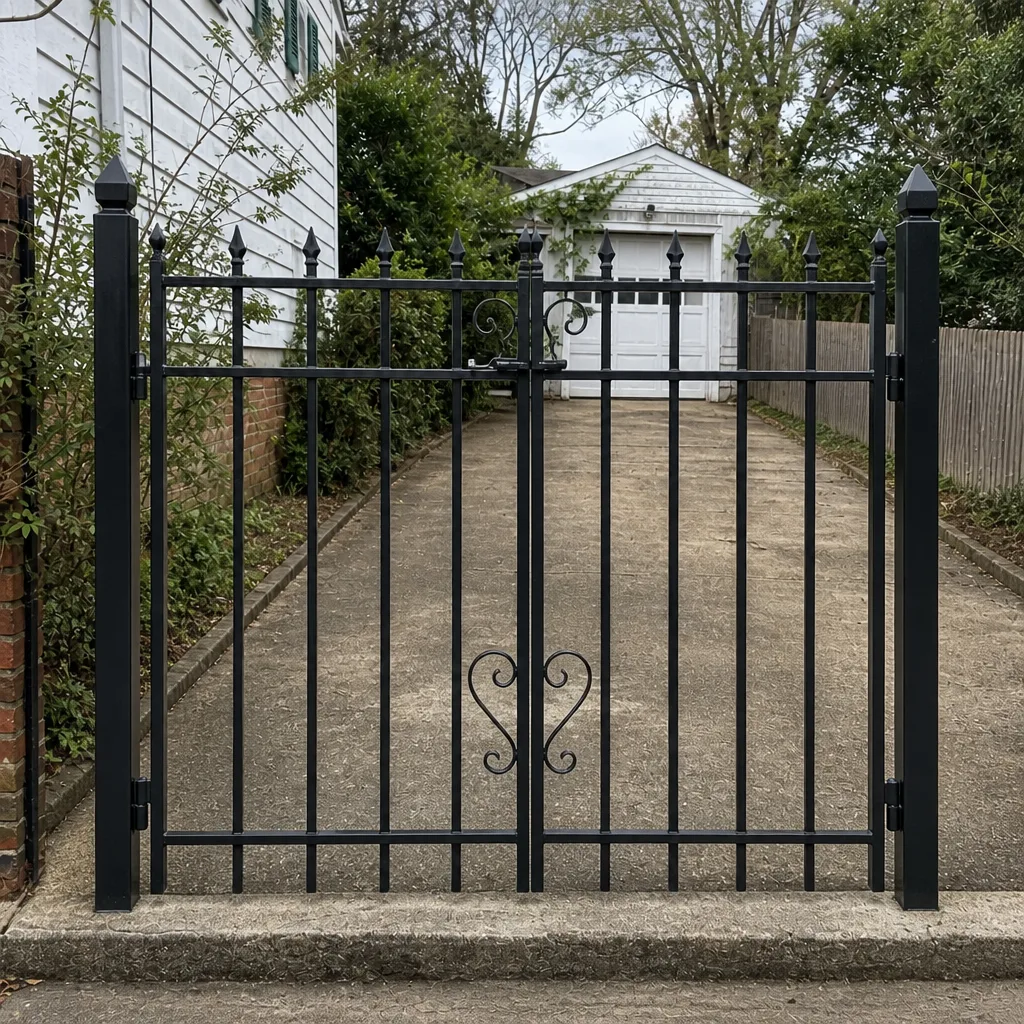
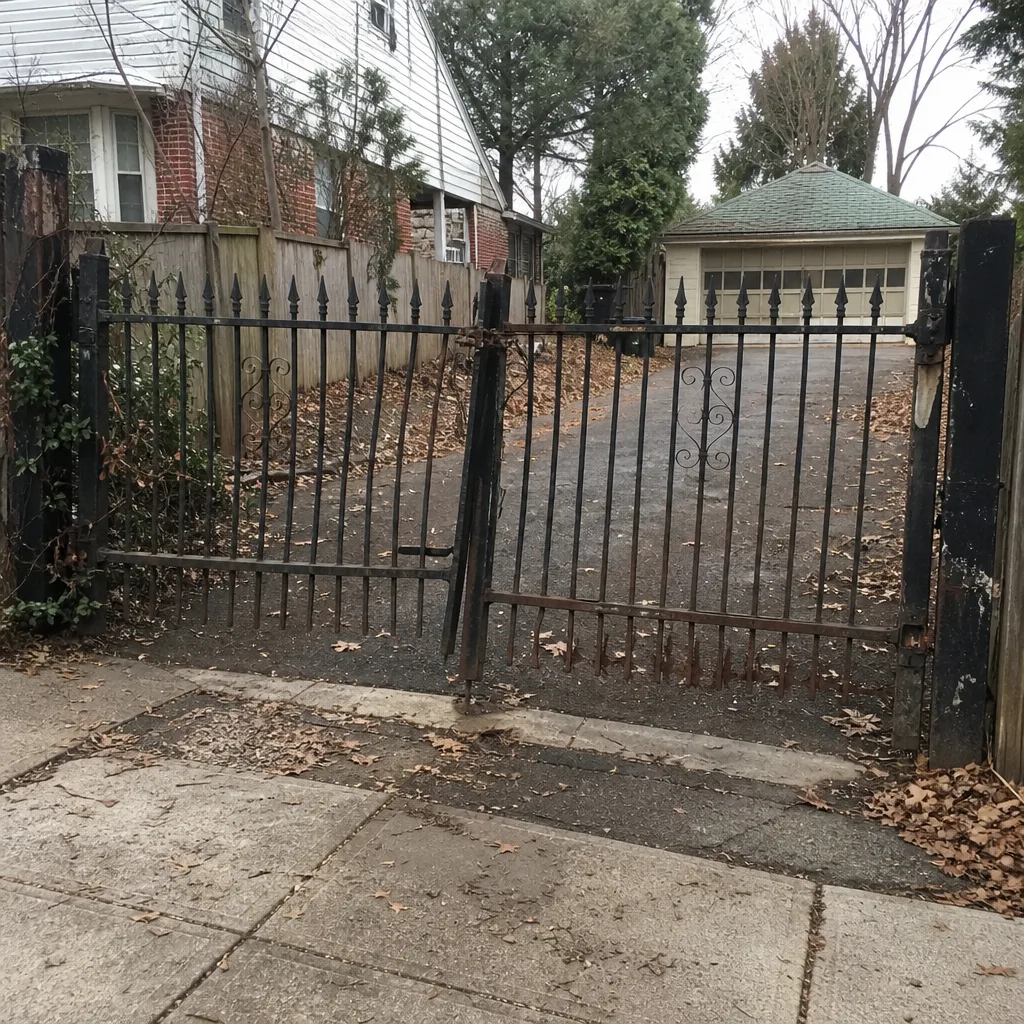
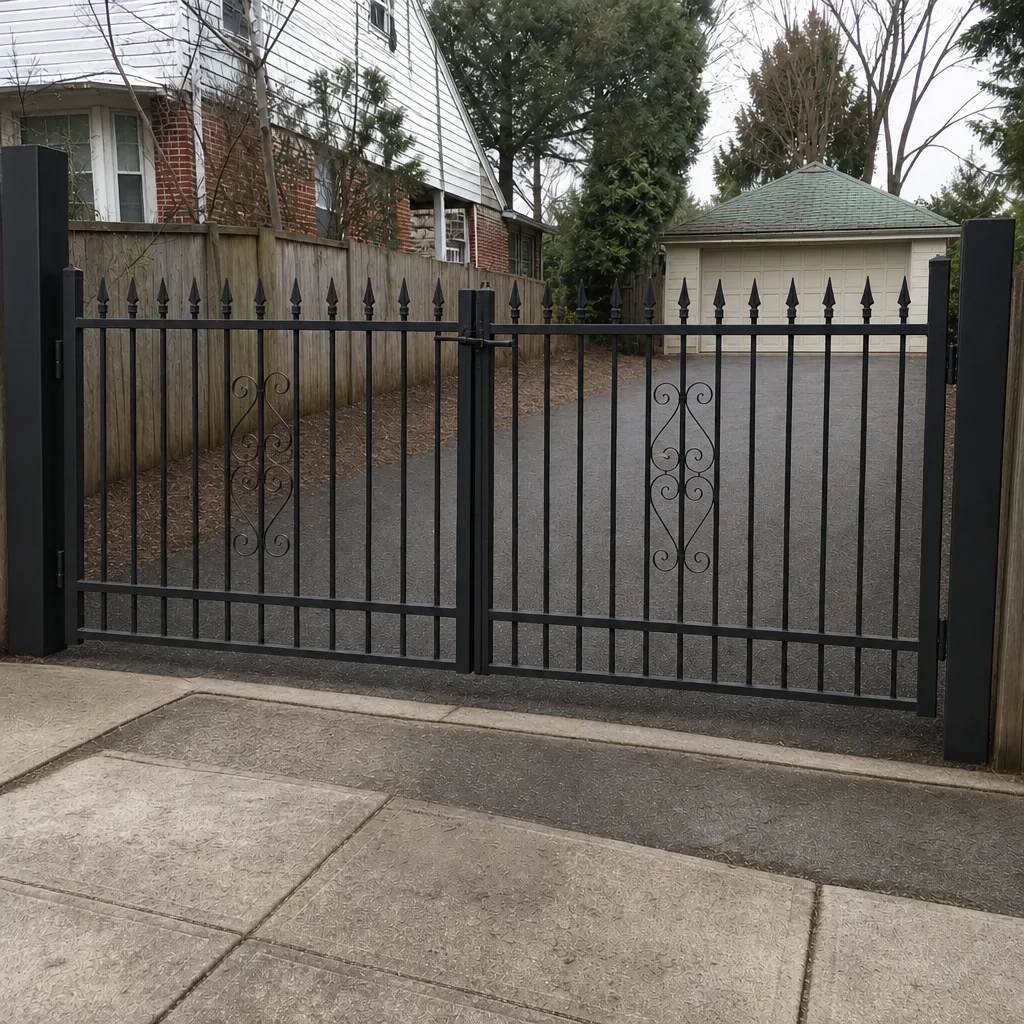
See the difference
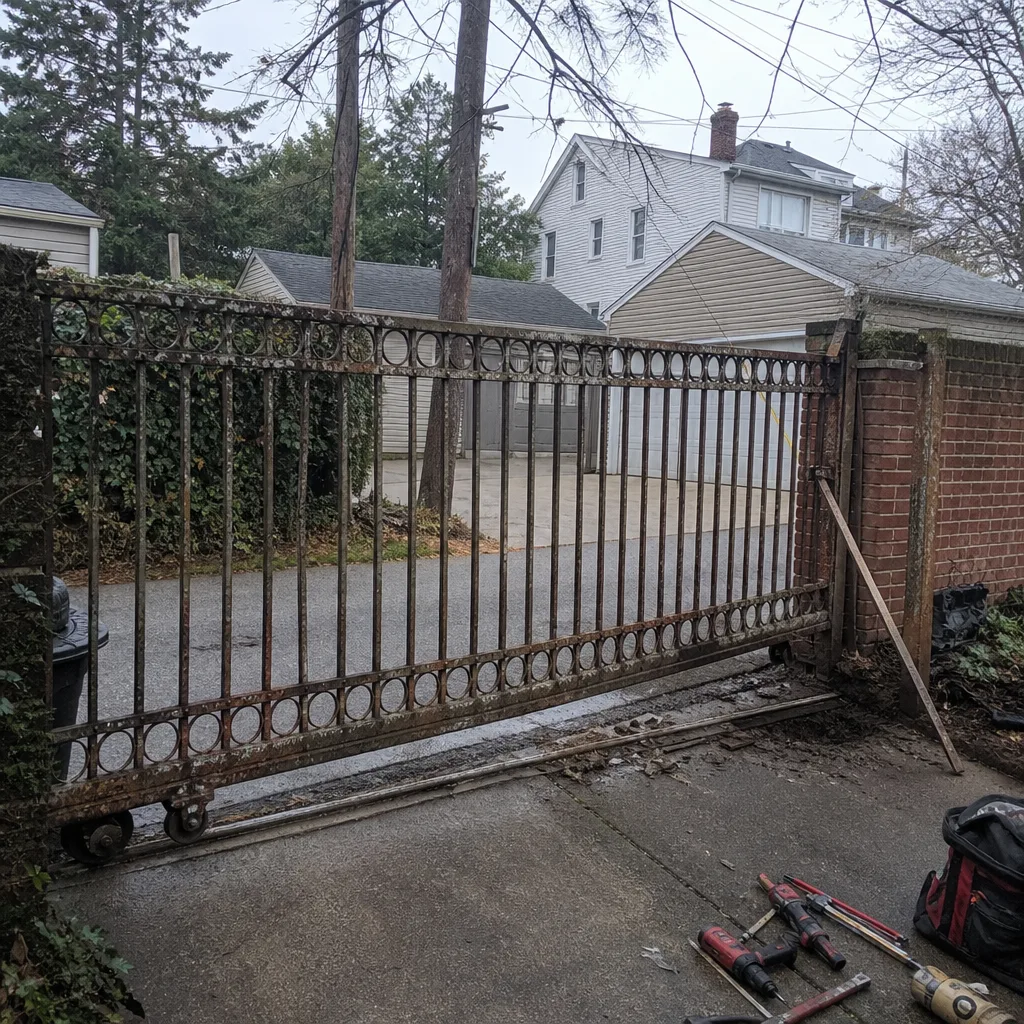 Before
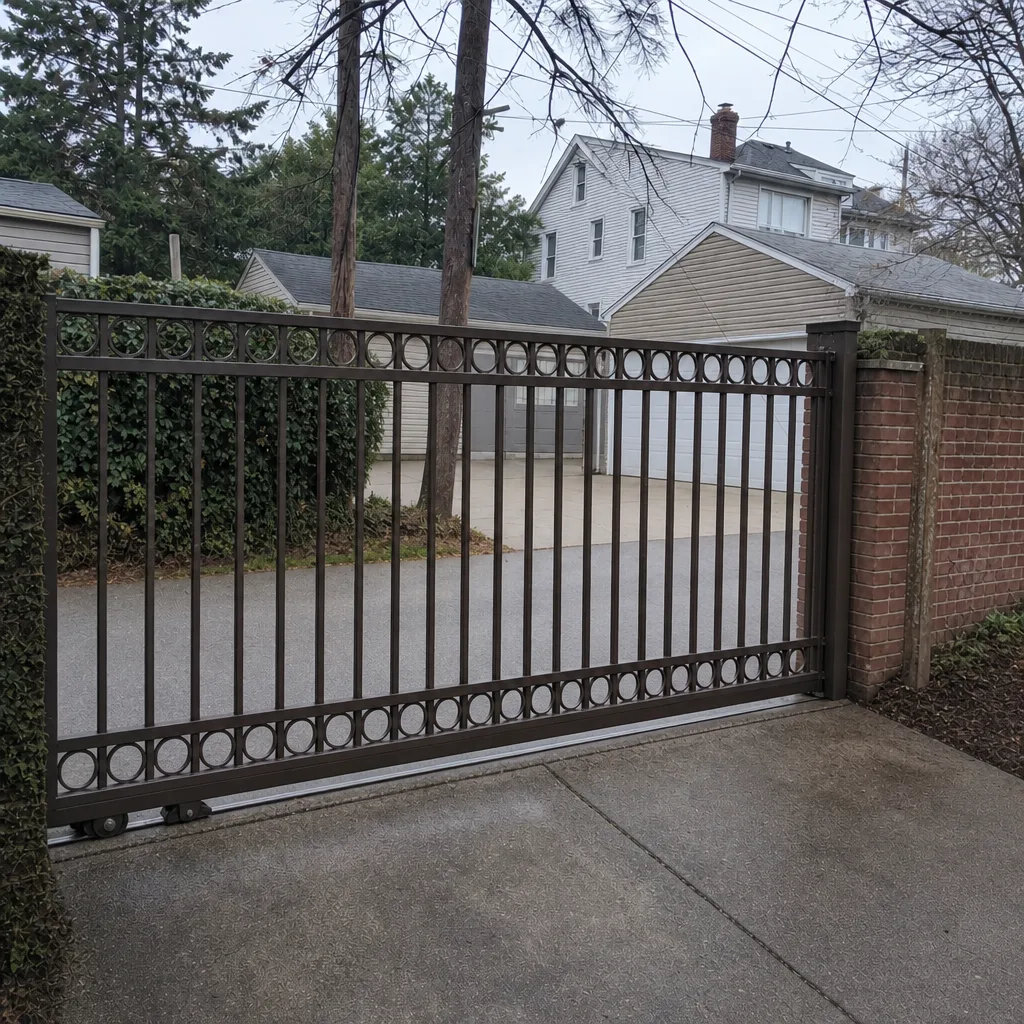 After
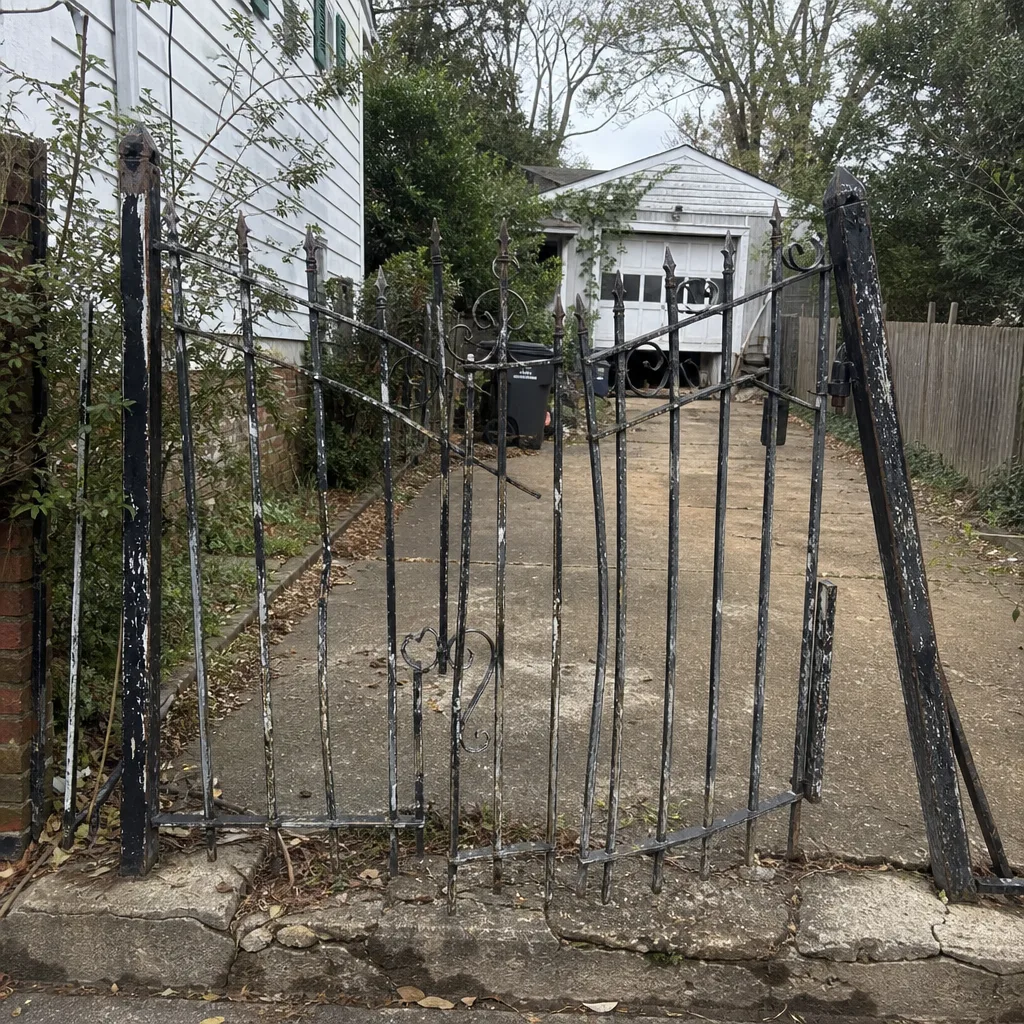 Before
 After
 Before
 After
When to Call a Professional
Call a gate technician when the operator doesn’t respond to a reset, when the gate is stuck closed and someone is trapped, when a gate is stuck open on a property that relies on it for security, when the manual release won’t engage or re-engage, when the operator runs on its own, or when a storm has knocked out power to the operator and it won’t come back. Call sooner if the gate is moving on its own or if the operator is beeping continuously; cut power at the breaker first. Gate Repair Washington offers free estimates in Washington. Call (888) 260-4909. We answer 24/7. Fast dispatch from 7am to 7pm, Sunday through Friday. A call outside dispatch hours is booked into the next opening.
Frequently Asked Questions
The manual release is usually a keyed lever or a crank on the operator housing, and its location depends on the brand and model. Check the label on the operator housing for the brand, then look for a key slot, a lever or a handle on the housing itself. On slide gates it’s often a lever that disengages the gear; on swing gates it’s often a key that frees the arm. Once you find it, practice once with the power off so you know it works before an emergency. If yours is stuck or missing a key, call (888) 260-4909 for a free estimate to restore it.
Neither is safe, but the urgent response is different. A gate stuck open is a security gap and should be secured by hand or by other means as soon as possible. A gate stuck closed is an access and safety problem and can trap a vehicle or a person, so the release takes priority. In both cases, don’t force the gate and don’t work on the operator wiring. Call a gate specialist to diagnose.
We work on the brand you already have, and we routinely diagnose systems from LiftMaster, FAAC, BFT, Linear, Viking, Ghost Controls, DoorKing, Elite and Mighty Mule. That brand coverage matters because diagnosis differs across operators. Call (888) 260-4909 for a free estimate, and describe the brand, model and symptom you have.
Most can’t, and shouldn’t. Electric gate repair involves operators, control boards, loop detectors, safety sensors and low-voltage wiring, and a specialist reads those systems by brand. A generalist usually starts from symptom to part without the brand logic, which takes longer and risks replacing the wrong part. If the gate is electric, call a gate specialist.
If the gate doesn’t move after you release the operator, stop and don’t force it. A stuck release, a jammed arm, a slide gate that’s off its track or a seized hinge can hurt you and cause damage if pried. Cut power to the operator at the breaker if it’s running or faulting, keep people clear of the gate’s travel path, and call for a technician. For a free estimate in Washington, call (888) 260-4909.
Yes, and most of what prevents failures is simple. Clearing ice and snow from sensors, sweeping debris out of the track and swing path, checking for water near the operator housing and testing the manual release before winter prevent the most common weather-related faults we see. Power surges are the other big cause, and surge protection for the operator circuit is worth discussing with an electrician. The rest is diagnosis. If a storm has already caused a fault, call (888) 260-4909 for a free estimate.
The Bottom Line
The most useful thing you can do about a gate emergency is prepare for it before it happens. Know your operator brand and model, find and practice your manual release, and know that a stuck-open gate and a stuck-closed gate need different responses. Keep sensors and tracks clear before storms, don’t force a stuck gate, and don’t work on operator wiring yourself. When something fails, call a gate-only technician with your brand, model and power status ready. Gate Repair Washington handles electric gate repair, manual gate repair and installation across Washington, and we diagnose by brand, not by trial and error. Call (888) 260-4909 for a free estimate. We answer 24/7. Fast dispatch from 7am to 7pm, Sunday through Friday.
Written by the team at Gate Repair Washington.